
AI news ·
Insurers tighten claims verification as AI-generated image fraud rises
Insurance document forgeries jumped 244% in 2024 as AI makes faking property damage easy. Carriers now demand unedited files and extra records to verify claims.
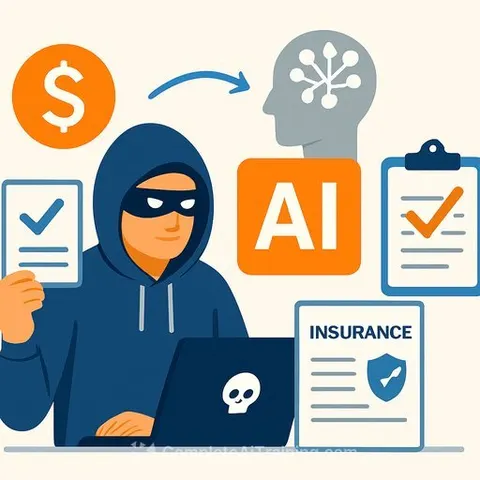
Digital document forgeries in insurance claims jumped 244% in 2024, according to the Entrust Cybersecurity Institute's 2025 Identity Fraud Report. Generative AI tools now let anyone add damage to a vehicle or roof with little more than a click, and insurers are scrambling to keep their verification processes current.
"Adding damage to a vehicle or a roof has become as easy as point-and-click or drag-and-drop," said Franklin Manchester, global insurance strategic advisor at SAS Institute. Free programs can even generate roofing invoices, he added.
The scale of AI-driven claims fraud
The numbers point to a problem that is outpacing the industry's defenses. Research from the Association of Certified Fraud Examiners and SAS found that only 7% of anti-fraud professionals are more than moderately prepared to detect or prevent AI-driven fraud. The rest are playing catch-up.
"The question is no longer whether an image can be fabricated, but if a verification process on the other end has kept pace," said Ben Colman, co-founder and CEO of Reality Defender, a deepfake detection company. Advisors can use that framing to help clients understand why even honest policyholders will encounter more friction during the claims process.
What's at risk for property policyholders
Property-related policies - homeowners, commercial property, flood, and high-value personal property coverage - face the highest exposure. These policies rely heavily on photographic evidence, which is now trivially easy to fake. Digital photos still carry value as supporting evidence, but they can no longer stand alone as independent proof of a loss.
"That's why strong supporting records such as receipts, inventories, videos and maintenance records are more important than ever before," said Steven H. Craft, Jr., founder and principal of Lucleon Insurance.
How insurers are tightening verification
Claims teams now routinely review metadata, previous inspection records, weather data, satellite imagery, and other third-party sources to confirm losses. The industry knows policyholders have the tools to falsify documents and create fake images, and it is responding with layered verification. For professionals working in AI for Insurance, the shift toward multi-source validation is reshaping claims workflows, underwriting, and risk assessment.
"Advisors should prepare clients for additional detail requested in the documentation as well as potential delays if evidence cannot be verified independently," Craft said. Even legitimate claims can stall when submitted photographs do not match timestamps, inspection records, or property details.
Why multiple forms of evidence matter
Claims hit snags most often when photos conflict with other data points. Craft encourages clients to take a proactive approach: conduct regular video walkthroughs, preserve original photo files, record serial numbers, and keep receipts. The most efficient claims, he said, are backed by multiple pieces of evidence.
Colman added a critical detail about how those files should be captured. All videos and photos must come from the client's own device, unedited, uncropped, and not processed through any app. "This is not foolproof by any means, but for an ecosystem largely lacking synthetic media detection tools, it's necessary in the process thanks to the advent and explosion of generative AI tools," he said.
Why this matters for insurance professionals
Advisors who explain the new reality early - more documentation, longer verification times, and zero tolerance for edited image files - will spare their clients frustration when a claim is filed. The 244% spike in digital forgeries means insurers have no choice but to treat every photo with skepticism. Preparing policyholders now, before a loss occurs, keeps claims moving and preserves trust when scrutiny inevitably intensifies.