
AI news ·
Jason Isbell and other musicians sue Suno over AI training and publicity rights
Jason Isbell and fellow musicians sued Suno in a proposed class action, claiming the AI music generator exploited their names and likenesses without permission. The lawsuit centers on publicity rights rather than copyright, alleging Suno mimicked their vocal styles on command.
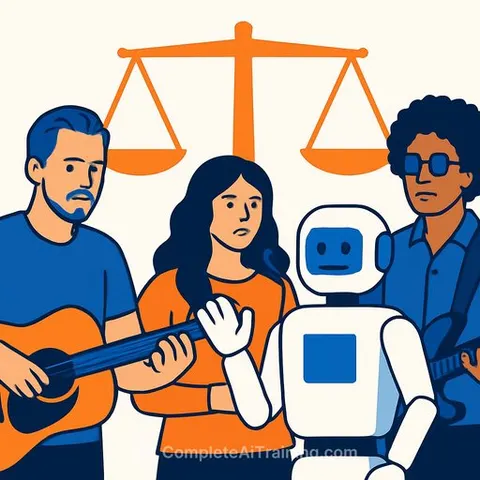
A group of musicians led by Jason Isbell filed a proposed class-action lawsuit against AI music generator Suno in Massachusetts federal court on Monday, alleging the company exploited their names and likenesses without permission. The complaint marks a distinct legal strategy in the growing conflict between artists and AI platforms, centering on publicity rights rather than the copyright claims that have defined most music-related AI cases to date.
The core publicity rights claim
Isbell, David Lowery of Cracker and Camper Van Beethoven, blues musician Guy Forsyth, and saxophonist Eduardo Calle argue that Suno used their identities to let users generate songs mimicking their styles. The lawsuit draws a sharp line between copyright ownership and identity rights. "Many musicians sell their rights to specific recordings. However, the identity right belongs to the performer regardless of who owns any copyright in an underlying recording," the filing states.
The musicians seek unspecified monetary damages and a court order blocking Suno from using their likenesses. The case, Isbell v. Suno Inc, was filed in the U.S. District Court for the District of Massachusetts under case number 1:26-cv-14005.
Suno's prompt-blocking claims under scrutiny
Suno said in a statement that it believes the claims lack merit. "Suno exists to help people create new, original music, not to trade on anyone's name," the company said. "We stand by the many protections we have put into place across the platform, including blocking prompts for specific artists' names or copyrighted songs."
The lawsuit directly challenges that characterization. "In reality, Suno not only accepts names but also responds to the name with an output based on that musician's identity," the complaint alleges. As evidence, the filing describes a prompt using Isbell's name that produced an Americana song called "Paper Bell" featuring what the suit calls his "characteristic clear male vocals and country twang." The complaint also names Carly Simon, Buddy Guy, and rappers Common and Chief Keef among artists Suno allegedly imitated on command.
A different front in the AI copyright wars
This lawsuit diverges from the copyright-focused cases major labels have brought against AI companies over lyrics, compositions, and sound recordings. Those disputes, including a settled case between Warner Music Group and Suno, have created complex questions for courts about fair use and training data. The publicity rights approach sidesteps those questions by targeting the commercial use of an artist's identity itself.
For legal professionals tracking AI litigation trends, the case highlights how plaintiffs are testing multiple theories of liability. Understanding these evolving strategies is becoming essential for attorneys advising clients in the music and technology sectors. Professionals looking to build competency in this area can explore AI for Paralegals or broader resources on AI for Legal to stay current on the intersection of artificial intelligence and intellectual property law.
Why this matters for legal professionals
The Isbell lawsuit signals that publicity rights may become a potent weapon for individual artists even when copyright claims face hurdles. Unlike copyright, which labels often control, identity rights stay with the performer. That creates a separate avenue for liability that AI companies cannot easily dismiss by pointing to licensing deals with rights holders. For litigators and in-house counsel, the case underscores the need to assess AI products for multiple layers of legal exposure - not just the use of protected works, but the commercial exploitation of personal identity.