
AI news ·
Jevons paradox suggests AI will expand software jobs, not eliminate them
Software development jobs are growing despite AI automation fears, mirroring past tech shifts where efficiency gains expanded demand rather than cut it. Developers who learn AI tools stand to gain more opportunities, not fewer.
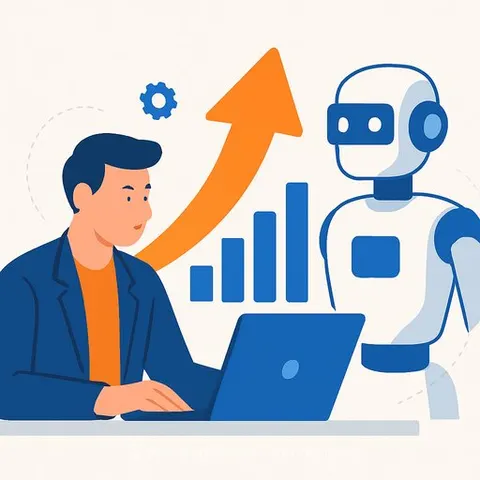
AI Won't Destroy Software Development Jobs - History Suggests the Opposite
Software development jobs are expanding, not contracting, as AI tools accelerate coding. Job postings continue to increase even as concerns about automation persist, defying the pattern of previous technological breakthroughs.
Fears of mass job loss from automation have surfaced repeatedly over two centuries. Each time, the pattern repeats: efficiency gains lead to increased demand, not unemployment.
The Jevons Paradox
In the 1860s, economist William Jevons observed that more efficient coal production didn't reduce coal demand - it increased it. Cheaper energy enabled new uses for coal, creating more jobs overall.
The automated loom followed the same trajectory. Textile manufacturers feared the power loom would eliminate weaver jobs. Instead, cheaper cloth production expanded the market, and employment in textiles grew.
Spinning jennies, automobiles, computers, tractors, and sewing machines all triggered similar warnings. None resulted in the predicted job losses.
Software's Appetite Will Grow
The same dynamic applies to AI-assisted coding. When developers can write code 10 or 100 times faster, companies don't cut 90% of their workforce - they build 10 times more software.
Existing applications will gain features stuck in backlogs for years. New software ideas too complex for humans to build alone will become feasible. The amount of work expands, not contracts.
The market is already showing signs. Job postings for experienced engineers remain strong, though entry-level positions are tighter. The skills required are shifting: writing good code and directing AI to write good code are related but distinct abilities.
The Real Shift
Some argue that pandemic-era overhiring and AI-generated job postings distort the picture. Possible. But the underlying trend holds: as tools become more efficient, demand for what they produce increases.
Developers who adapt will find more opportunities, not fewer. The bottleneck moves from "can we build this?" to "what should we build?"
Consider the history: the PC didn't destroy mainframe work. The internet didn't eliminate off-the-shelf software. Open source didn't kill commercial software. Offshoring didn't end American programming.
AI will follow the same pattern. The software industry will expand, and developers who understand both code and AI tools will be in demand. Learn more about generative code and explore an AI learning path for software developers to stay ahead of the shift.