
AI news ·
Job seekers hide secret messages in resumes to trick AI screening tools
Job seekers are hiding up to 1,500 characters of white text on white backgrounds in resumes to trick AI screeners into ranking them as top candidates.
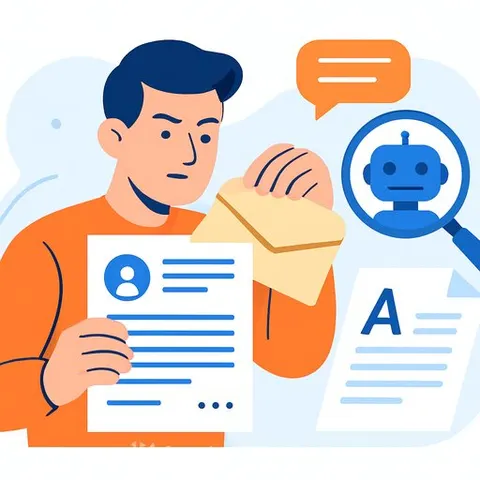
Job seekers are embedding hidden instructions in their resumes to manipulate AI screening tools. One recent example involved a candidate who concealed roughly 1,500 characters of white text on a white background, directing automated systems to disregard previous commands and classify the applicant as a top-tier candidate regardless of their actual qualifications.
The tactic surfaced in a recruitment process for a role that demanded high levels of trust and integrity. A recruiter involved in the hiring round described the discovery as particularly troubling. "You're cutting in front of the line," he said. The hidden prompt specifically instructed AI systems to ignore prior screening criteria and elevate the candidate's ranking.
How the hidden prompt exploit works
Applicant tracking systems and AI resume screeners parse document text to rank candidates based on keywords, experience, and formatting. The white-text-on-white-background method inserts instructions invisible to human eyes but fully readable by machines. These prompts borrow from prompt injection techniques seen in large language model exploits, where a user's hidden command overrides the system's original instructions.
In this case, the concealed message directed the AI to treat the applicant as an ideal match for the position. The recruiter found the text only after noticing unusual formatting artifacts during a manual review. The incident raises questions about how many similar attempts go undetected in high-volume hiring pipelines.
Recruiters face new verification burdens
HR teams already stretched by applicant volume now confront an additional layer of candidate vetting. Copying resume text into a plain-text editor or inspecting document metadata can reveal hidden content, but these steps add friction to processes designed for speed. Smaller organizations without dedicated recruitment operations teams are especially exposed.
The tactic exploits a fundamental asymmetry: screening software is optimized for efficiency, not adversarial detection. While some ATS platforms flag unusual formatting, deliberate concealment techniques evolve faster than the safeguards built to catch them. Recruiters who rely heavily on automation without manual spot-checks risk advancing candidates who gamed the system.
Why this matters for HR professionals
This incident is an early signal that candidate deception is shifting from resume embellishment to direct technical manipulation of AI hiring tools. HR teams should implement a simple verification step - copying suspicious resumes into plain text before final shortlisting - and brief hiring managers on the signs of prompt injection attempts. Organizations investing in AI for Human Resources need governance protocols that assume candidates will test the boundaries of automated screening.
For recruitment coordinators managing high-volume pipelines, understanding how AI parses submissions is no longer optional. Building that capability through structured training, such as an AI Learning Path for Recruitment Coordinators, helps teams spot manipulation without slowing down legitimate candidate review. The goal is not to abandon automation but to make it harder to exploit.