JPMorgan hires UBS AI lab leader to put AI at the center of HR
JPMorgan just brought on Ronald Jansen as head of AI for human resources and employee experience. After two decades building tech for investment bankers, he's now pointing that skill set at people decisions. The message to HR leaders is clear: AI isn't a side project anymore. AI for Human Resources
Jansen spent the last seven years at UBS as an MD and global head of its AI lab in the global banking division. Before that, he spent 13 years at Goldman Sachs-eight as an MD-leading strats teams across M&A, capital markets, and derivatives structuring. He's seen how high-stakes decisions get made and optimized.
This hire follows a string of senior additions to JPMorgan's HR and employee experience group. The bank brought in Matt Brandt from Morgan Stanley to head data and analytics, and also hired a head of talent transformation from Accenture. It's a build-out that signals scale and speed.
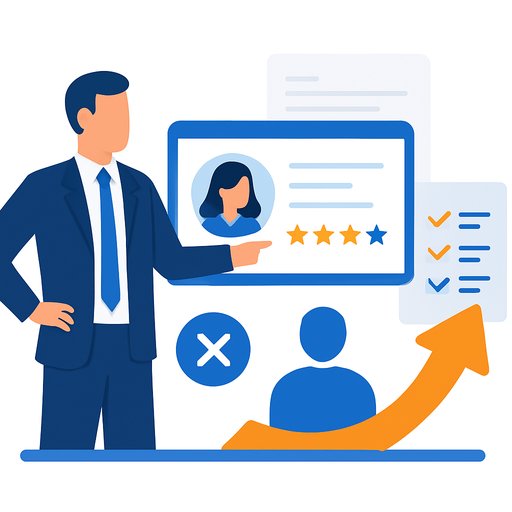
AI is already inside performance reviews. Bloomberg reported in November that JPMorgan managers can use internal AI bots to draft reviews. Citi's CEO Jane Fraser said there were cheers when the bank let staff use AI to assess performance. The train has left the station.
The stakes are real. The tech Jansen develops could influence who gets promoted-or who gets cut. At Davos, CEO Jamie Dimon said he expects JPMorgan to have fewer employees in five years and has already removed entire job categories with AI. Context from Davos.
What this means for HR leaders
AI is moving from back-office analytics to decisions that affect pay, promotions, and careers. That's a different level of risk, scrutiny, and operational rigor. Here's how to respond.
- Set a clear policy and governance model. Define where AI drafts vs. decides. Keep a human in the loop for any decision with material impact. Require sign-off for new use cases.
- Prioritize transparency. Use models that can explain why they suggested a rating or decision. Share plain-language rationales and the main factors considered.
- Test for bias-before and after launch. Run adverse impact analysis across groups, monitor drift, and set alert thresholds. Document mitigation steps and re-tests.
- Clean data first. Lock a single source of truth for performance, skills, and role data. Strip out junk proxies (school, zip code, tenure-only signals) that drive bias.
- Respect privacy and consent. Map data flows, retention, and access. Communicate what's collected, why, and how decisions are made. Reduce surprises.
- Stay ahead of regulation. Treat employment-related AI as high-risk under the EU AI Act and align with EEOC expectations in the U.S. Local works councils and unions may require notice or negotiation.
- Build guardrails. Keep audit logs, approval workflows, and a kill switch for models. Cap automation levels until results are proven.
- Enable managers. Train leaders to edit AI-drafted reviews, check tone, and add specific evidence. Make calibration sessions mandatory to catch drift.
- Protect employees. Offer an appeal path, clear SLAs, and the right to a human review. Show them how feedback is generated.
- Vendor due diligence. Ask for model cards, data lineage, fairness testing, and security controls. Pilot in a sandbox with shadow reviewers before rollout.
- Measure what matters. Track time saved per review, disagreement rates between AI and humans, adverse impact deltas, promotion-cycle speed, and a "quality of feedback" score.
- Start small, scale with proof. Pilot with two business units, keep a control group, and publish results. Expand only when outcomes are stable and fair.
Why JPMorgan's move matters
Putting a senior quant and AI leader in HR signals a shift: talent decisions will be treated with the same rigor as trading or risk. Expect more banks-and large enterprises-to copy this structure. HR's operating model will look more like a product team than a service desk.
AI-generated reviews aren't a novelty anymore. They're becoming standard in large firms under cost pressure. HR will be expected to deliver faster cycles, better consistency, and cleaner documentation-without losing fairness or context.
90-day action plan
- Inventory every place AI touches people data (reviews, promotions, hiring, mobility, learning).
- Draft an AI in HR policy; get Legal and Privacy to sign off.
- Pick 2-3 pilots: performance review drafting, internal mobility matching, and skills inference.
- Define success metrics and failure thresholds upfront.
- Stand up a fairness testing pipeline with scheduled audits.
- Create manager and employee FAQs with transparent examples.
- Train managers on prompts, review etiquette, and bias checks.
- Set up an appeal process and human override for decisions.
- Build dashboards for leadership: adoption, quality, and risk indicators.
- Form an ethics review group with HR, Legal, Data, and business leaders.
Upskilling for HR
If your team is being asked to run AI-driven reviews, don't wait for perfect certainty. Build capability now and iterate safely. A good starting point is role-specific learning paths and practical prompt guidance.
JPMorgan's hire is a signal. HR tech is moving from nice-to-have to core infrastructure. The teams that set guardrails, upgrade manager skills, and measure outcomes will come out ahead.
Your membership also unlocks: