
AI news ·
Legal complaint alleges Meta used AI to terminate employees on protected leave
A lawsuit alleges Meta used AI to fire workers on protected leave. The filing follows mass layoffs that eliminated 8,000 jobs.
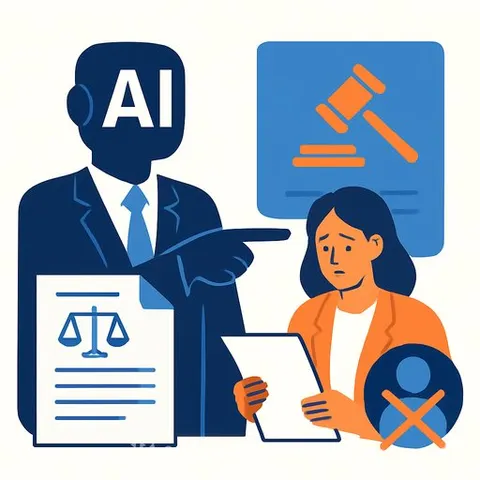
A legal complaint filed July 13 in a US District Court in California alleges that Meta used AI systems to select employees for termination while they were on protected leave. The case, brought by more than two dozen anonymous plaintiffs, highlights the legal and operational risks enterprises face when AI influences workforce decisions.
Meta notified roughly 10% of its workforce-around 8,000 employees-on May 20, 2026, that they had been selected for layoff. Several thousand more were reassigned to new AI initiatives. The cuts came even as Meta reported record Q1 2026 revenue of $56.31 billion, a 33% year-over-year increase, and pledged to spend upwards of $100 billion on AI this year.
The complaint alleges that Meta used a "constellation" of internal AI systems to score, rank, and select employees. These tools included Metamate, Meta's internal AI coworker; employee-trained "second-brain" agents that replicated individual output; algorithms tracking keystrokes and digital activity; and AI token usage dashboards. "Meta did not assemble the termination list through the considered judgment of managers who knew the work," the filing states.
The 26 plaintiffs-all current or former employees-requested, took, or were approved for statutorily protected leave within 24 months of the reduction. They claim they were "disproportionately selected" based on scoring that penalized them for exercising their legal right to take leave. Such practices are prohibited under the federal Family and Medical Leave Act, which bars using protected leave as a "negative factor" in employment decisions. The complaint also asserts Meta violated the Worker Adjustment and Retraining Notification (WARN) Act by failing to provide 60 days' written notice, leaving employees on leave without reasonable time to seek alternate work.
Specific examples in the filing include a scientist identified for termination two days before she gave birth while on pregnancy leave, an engineer whose manager tied his performance rating to "broken time" when an injury prevented him from working, and a researcher called out after requesting time off following a medical diagnosis. The plaintiffs seek a preliminary injunction to halt final separations and an independent audit of the algorithmically assisted selection process.
The enterprise lesson
"Enterprises must begin by rejecting the convenient assumption that AI improves workforce decisions simply by touching them," said Sanchit Vir Gogia, chief analyst at Greyhound Research. "It makes them faster, and faster has never been shown to be fairer."
Gogia emphasized that any system materially influencing who keeps a job is not an HR tool. "It is high-risk enterprise infrastructure." The distinction between an "AI-determined" process and an "AI-assisted" one often collapses in practice, he said, because the output is compressed and stripped of detail by the time a human signs off. For HR teams navigating these challenges, AI for Human Resources resources can help frame the governance conversation.
Governance essentials for AI-assisted layoffs
Gogia stressed that organizations need one non-negotiable role: a single executive with the authority to halt the process, suspend the model, and delay decisions when evidence does not hold. "A meaningful reviewer understands the model's limits, knows the actual work, and holds the authority to challenge the recommendation, with every override visible and reviewable," he said. The objective is to govern the machine and the manager together, since human judgment carries its own risks of favoritism and proximity bias.
Enterprises should retain fixed memory for auditing, determine who chose the auditor and what was excluded, and confirm whether the result can be reproduced. They must inventory every data source feeding the model and run adverse-impact analysis before any firing decision. Protected leave details must never be identified as inactivity or weak adoption. Instead, these circumstances belong in an "independent review lane," where human reviewers receive enough context to neutralize the period without seeing specific leave details. AI Learning Path for CHROs provides structured guidance on building such oversight frameworks.
Gogia also raised a critical question: What should the "second brain" AI agent that ingested an employee's communications and documents be allowed to do when the person is away, and who owns that output? The safest position, he said, is not to ban AI from workforce planning. "Used with discipline, it can expose duplicated work and inconsistent assessment, and it can challenge human bias rather than automate it."
How employees can protect their rights
Employees need a genuine window to challenge inaccurate data before separation becomes irreversible, Gogia advised. They should "fight the record, not the algorithm." That means lawfully retaining their own reviews, leave approvals, and severance documents, and building a chronology: when leave was requested, when performance language changed, when new metrics appeared.
Impacted workers should ask in writing which criteria were used, whether automated systems materially influenced the decision, how protected leave was treated, and what information about them influenced the result and how it was verified. Pay attention to deadlines-the federal discrimination window is typically six months, extended to ten in many places, and internal processes are not obliged to respect it. "Preserve the lawful record, and protect the deadline," Gogia said.
Why this matters for HR professionals
The Meta complaint makes clear that AI-assisted termination decisions require rigorous governance, not just a sign-off step. HR leaders must ensure any system that ranks or scores employees includes a human reviewer with real authority to challenge outputs and pause the process. Protected leave is a legal status, not a data gap-systems must be explicitly designed to treat it as such. The lesson is not to avoid AI, but to deploy it in a way that surfaces bias and inconsistency while keeping a human override firmly in place, with every decision documented and auditable.