
AI news ·
Maine becomes first US state to pass moratorium on large AI data centers
Maine passed legislation Tuesday to pause approvals for large AI data centers, becoming the first state to impose such a moratorium. The freeze blocks facilities over 20 megawatts until late 2027 while a state council studies grid and cost impacts.
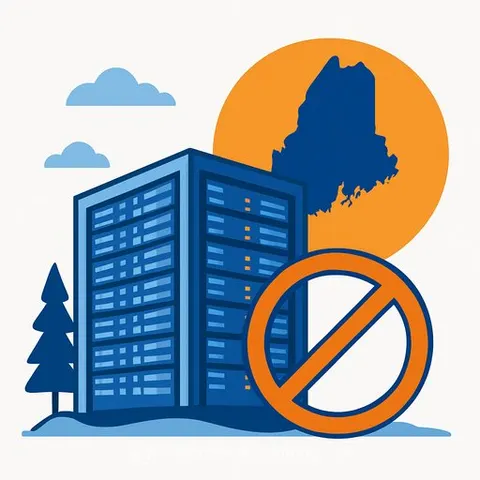
Maine becomes first state to pause AI data center construction
Maine passed legislation Tuesday to temporarily halt approvals for large data centers, making it the first state to impose a statewide moratorium on facilities driven by artificial intelligence demand. Governor Janet Mills must sign the bill for it to take effect.
The pause would block approvals for data centers requiring more than 20 megawatts of power until late 2027. During that period, a state council will study the centers' effects on electricity grids, household costs, and the environment.
Representative Melanie Sachs, who sponsored the bill, said residents across Maine requested action. "People and communities across the state have been asking the Legislature to take action and temporarily pause these projects, which could have significant impacts on ratepayers, our electric grid and our environment," she said.
Rising energy costs fuel local opposition
Maine has experienced climbing energy costs in recent years. A recent poll found 65% of Americans oppose having a data center built in their community.
Supporters argue that energy-intensive data centers strain local power systems, raise household electricity bills, and consume significant land and water resources. Maine currently has no major data centers, though several proposals have emerged recently.
Governor Mills had sought an exemption for a smaller project using existing infrastructure with minimal grid impact.
Other states considering similar action
Eleven other U.S. states are discussing comparable proposals. In February, residents in New Brunswick, New Jersey, blocked a data center project citing energy consumption, environmental concerns, and real estate demands.
Federal lawmakers have also taken notice. Senators Bernie Sanders and Alexandria Ocasio-Cortez introduced legislation in March to halt all data center construction until Congress passes AI safety rules. Senators Josh Hawley and Richard Blumenthal introduced separate measures addressing data centers' effects on energy costs.
For real estate and construction professionals, understanding these regulatory shifts is essential. AI for Real Estate & Construction covers how artificial intelligence is reshaping development planning and infrastructure projects. AI for Operations addresses the infrastructure and resource management challenges these facilities present.