
AI news ·
Major patent offices update guidelines on human inventorship for AI-assisted inventions
Generative AI patent filings grew 800 percent since 2017, straining global examination systems. The USPTO now requires documented human conception to approve them.
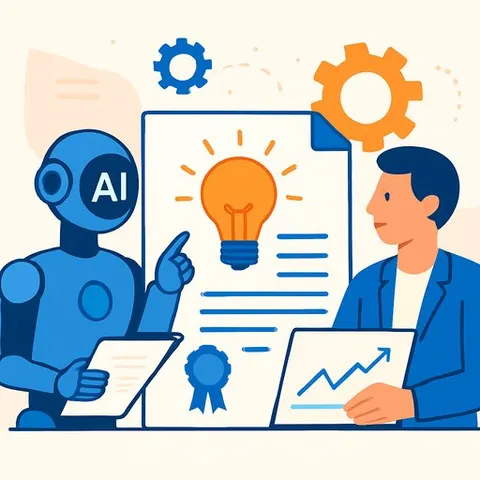
Patent offices worldwide are struggling to adapt their examination infrastructure to a surge of AI-generated inventions in drug discovery, chip design, and software architecture. As generative AI patent filings grew 800 percent since 2017, major intellectual property authorities must now define whether these outputs can be protected and who legally owns them.
The global filing surge
The five largest intellectual property offices account for approximately 85 percent of global patent applications. These offices-the European Patent Office, Japan Patent Office, Ministry of Intellectual Property of Korea, China's National Intellectual Property Administration, and the USPTO-recently agreed to strengthen cooperation on AI. They committed to a full review of a joint AI roadmap first endorsed in 2021.
The World Intellectual Property Organization reported 3.7 million patent applications in 2024, a 4.9 percent increase over 2023. AI and computer technology drove this growth, marking the fastest year-on-year increase since 2018. In 2023 alone, more than 25 percent of all generative AI patents ever filed were published in a single twelve-month period. The USPTO and other major intellectual property offices are actively managing the AI for Government implications of this filing surge, though the examination systems underneath have not kept pace.
Human conception remains the legal standard
The USPTO issued revised guidance clarifying that AI systems function as tools, not inventors. Only natural persons can be named on U.S. patent applications involving AI-assisted inventions.
Under this framework, the traditional conception standard applies. The guidance defines conception as "the formation in the mind of the inventor of a definite and permanent idea of the complete and operative invention."
For companies deploying agentic AI in research and development, every AI-assisted invention requires documented human contribution at the conceptual level. The AI can search, generate, and optimize, but the human directing the process must independently form the settled idea. Organizations that fail to document this distinction risk having their patents rejected during review.
Unresolved questions in patent law
While the USPTO guidance answered the basic inventorship question, it left other areas open. A recent analysis in the Oxford Journal of Intellectual Property Law and Practice said treating AI as an instrument analogous to laboratory equipment leaves unresolved questions. These gaps could yield inconsistent Patent Trial and Appeal Board and court decisions.
The conception standard was built for a world where a human engineer worked through a problem from first principles. It was not designed to describe a workflow where an agent processes ten million molecular combinations overnight and surfaces three candidates worth patenting. Courts and patent boards have not yet answered consistently whether the human directing that process contributed enough to constitute legal conception.
Why this matters for government, IT, and development professionals
IT and development teams building or deploying agentic AI must document the exact moment a human forms the definite and permanent idea of an invention. Government and compliance professionals must prepare for inconsistent rulings as courts test the boundaries of the traditional conception standard against modern AI workflows. Failing to draw this line clearly in documentation will leave patent applications vulnerable to rejection.