
AI news ·
Malawi's AI-powered patient monitoring system reduces pediatric deaths
Malawi hospitals cut pediatric deaths 40-51% with IMPALA, an AI system that predicts patient crises hours ahead. It helps offset a shortage of fewer than 40 pediatric specialists.
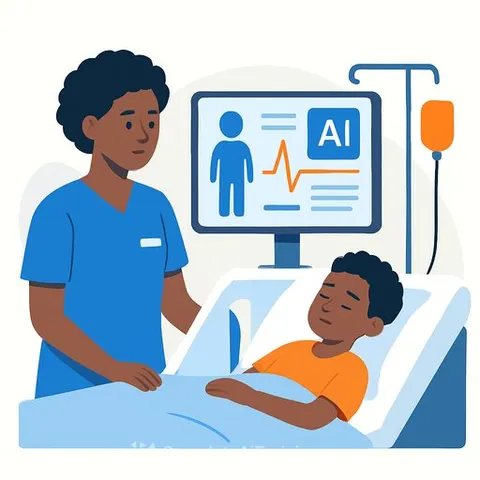
Two hospitals in Malawi saw pediatric deaths drop by 40% to 51% after deploying IMPALA, an AI-driven patient monitoring system that predicts deterioration up to three hours before a crisis. The technology is helping offset a critical shortage of pediatricians in a country where fewer than 40 specialists serve the entire health system.
How IMPALA Works
IMPALA, which stands for Innovative Monitoring in Pediatrics in Low-resource Settings, was developed by Dutch social enterprise GOAL 3. The system uses bedside units that continuously measure vital signs, a local server for data processing, and a tablet app that shows live data for as many as 30 patients at once. When a child's readings cross predefined thresholds, the system generates visual and audible alerts, letting nurses prioritize the sickest patients immediately.
Gift Mhango, a pediatric nurse at Our Lady of Mount Carmel Community Hospital in Kapiri, described the shift in workload. "With the tablet present, you can be taking care of another child at the same time and have an eye looking at the tablet. If something is going wrong with a child, you can quickly go and respond," Mhango said.
Addressing a Critical Doctor Shortage
Malawi has one of the lowest physician-to-patient ratios worldwide. The Paediatrics and Child Health Association estimates the ratio of pediatricians to child patients at roughly 1:50,000. The association says the lack of specialists drives up morbidity and mortality among children. IMPALA fills part of that gap, especially in constant monitoring and early warning tasks that were once entirely manual.
Blessings Juma, head of the pediatric ward at Mangochi District Hospital, told El Pais that before IMPALA, the ward might record four deaths in a one- to two-week span. "Now they record one within the same timeframe," he said.
Dr. Jessica Chikwana, a pediatrician at Zomba Central Hospital, saw the change in morning handovers. "Prior to the induction of IMPALA, I could often be in handover in the morning and just be given a file [saying] baby found dead, rest in peace, but I don't see these things anymore," Dr. Chikwana said.
The Machine Learning Approach
William Nkhono, a data manager and PhD Research Fellow on the IMPALA project, said the system's machine learning models can help distribute staff and supplies more efficiently. It has cut child deaths by a third even when patient volumes were high, while costing about 16% less than standard monitoring equipment.
Nkhono added that countries like Malawi need to invest in digital infrastructure, capacity building, and regulation to capture AI's full potential. "Machine learning can contribute to reducing child mortality and morbidity in low- and middle-income countries," he said. The system has since been rolled out at hospitals in Rwanda, Kenya, and Tanzania.
Why this matters for healthcare professionals
IMPALA shows how AI-driven monitoring can deliver measurable mortality reductions without replacing clinicians, but by extending their reach. For healthcare teams, the lesson is that integrating predictive alerts into existing workflows can ease the burden on overstretched staff and catch preventable crises earlier. As tools like IMPALA scale, professionals seeking to understand or implement similar systems may find value in structured AI for Healthcare Courses that cover clinical data science and real-time monitoring applications.