
AI news ·
MARA Holdings expands beyond Bitcoin mining into AI infrastructure and energy management
MARA Holdings has repositioned itself as an energy infrastructure company, converting stranded electricity into Bitcoin and AI computing power. Its 2026 acquisition of EDF subsidiary Exaion marks a push into European AI and cloud markets.
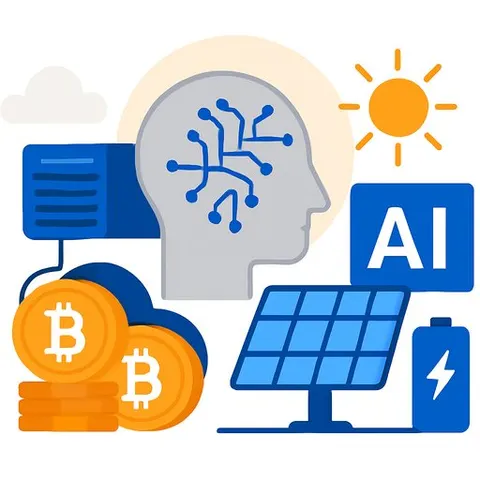
MARA Holdings Shifts From Bitcoin Mining to Energy Infrastructure Play
Marathon Digital Holdings (MARA) has reframed its business around a core thesis: converting surplus electricity into computing power for Bitcoin and artificial intelligence workloads. The company no longer operates as a traditional cryptocurrency miner but as an energy infrastructure manager that captures stranded power - from renewable volatility or isolated natural gas sources - and converts it into digital assets.
This shift matters to executives evaluating infrastructure investments. MARA's model insulates profit margins from energy price swings by securing low-cost power directly from production sources, then monetizing that power through multiple revenue streams.
How MARA Captures Stranded Energy
The company's Delaware Basin operations exemplify the approach. MARA partnered with MPLX LP to use natural gas from processing plants for on-site electricity generation. The setup creates a two-way transaction: energy producers gain a reliable buyer for excess gas, and MARA secures cheap, stable power for its data centers.
MARA operates mining facilities across Texas, Nebraska, and Ohio, mixing owned and hosted infrastructure to optimize power contracts and maintain high uptime during grid stress.
European Expansion Into AI and Cloud Services
In early 2026, MARA acquired a majority stake in Exaion, a subsidiary of French energy company EDF. The move signals a deliberate pivot beyond Bitcoin into artificial intelligence and high-performance computing markets.
Exaion brings established partnerships with NVIDIA and Deloitte, along with engineering expertise for managing complex AI workloads. MARA established its European headquarters in Paris to integrate into continental energy markets characterized by high renewable penetration and carbon regulations.
The acquisition serves two functions: diversifying revenue beyond Bitcoin's four-year halving cycles, and applying cooling and power management techniques refined in mining operations to edge computing and data centers.
Capital Strategy and Balance Sheet Management
MARA treats Bitcoin as a productive asset on its balance sheet rather than a trading position. The company maintains one of the largest corporate Bitcoin treasuries globally.
In Q1 2026, MARA issued zero-coupon convertible senior notes due 2032 to fund growth without immediate equity dilution. Proceeds went toward Bitcoin accumulation, debt refinancing, and data center expansion.
For executives analyzing the company, these convertible notes represent a calculated bet on long-term digital asset appreciation, allowing aggressive infrastructure scaling without equity dilution.
Grid Services as a Revenue Driver
MARA's software systems allow mining operations to participate in demand-response programs. During peak electricity demand, the company can instantly reduce mining operations and return power to the grid, preventing blackouts.
This capability transforms data centers from passive power consumers into active grid participants. Grid operators increasingly value this flexibility, and it's becoming a driver of MARA's valuation targets.
What Executives Should Watch
MARA operates as a NASDAQ-listed, SEC-reporting company. The company discloses significant risks in its 10-K filings, including regulatory uncertainty around digital assets and the inherent volatility of cryptocurrency prices.
The business model depends on continued access to cheap energy sources and sustained demand for computing power from AI and blockchain applications. Both remain subject to regulatory and market shifts.
For strategy teams evaluating infrastructure or energy plays, MARA's approach demonstrates how energy producers and data center operators can collapse traditional boundaries. The company's success hinges on its ability to maintain cost advantages in power procurement while scaling AI workloads across geographies.
Learn more about AI strategy for executives and AI applications in finance.