
AI news ·
Mayo Clinic develops artificial intelligence tools to guide clinical procedures in rural communities
Mayo Clinic is building AI to guide rural healthcare workers through routine clinical procedures. The model was trained on 300 blood draws to support mobile care teams.
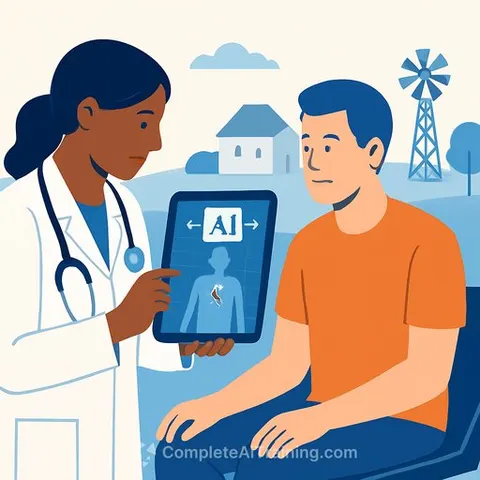
Mayo Clinic is developing artificial intelligence tools to help healthcare workers perform clinical procedures in rural and underserved communities. Funded by the Advanced Research Projects Agency for Health (ARPA-H), the initiative aims to reduce travel burdens for patients who currently must travel long distances for routine care like blood draws.
Guiding rural clinical procedures
Mayo Clinic serves as a subawardee on the Platform fOr mEdical inTeroperability (POET) project. The clinic collaborates with SRI International and the University of Florida to build intelligent task-guidance systems. The project applies AI for Healthcare to support clinicians in safely performing procedures where specialized care is not always available.
Training AI on routine care
Phlebotomy serves as the initial focus for this technology. Patients in rural areas frequently travel long distances for routine blood draws or IV placement. The new model enables mobile care teams to deliver these services locally.
A healthcare worker in a mobile unit could perform a blood draw guided in real time by AI-assisted tools. Using advanced imaging and computer vision, the system identifies the optimal vein and visually highlights needle placement. It also provides step-by-step guidance through each part of the procedure.
During the first year, Mayo recorded 300 blood draws to train the AI systems on vein selection and technique. "If you think broadly across medical procedures, phlebotomy is arguably the most frequently performed," said W. David Freeman, M.D., professor of neurology and neurosurgery at Mayo Clinic Florida and co-lead on the project. "It's foundational - you need blood draws for diagnostics and IV access for treatment."
Broadening to additional procedures
Developers are building similar guidance tools to reduce delays in other point-of-care procedures, such as orthopedic splinting. These additions will allow mobile teams to address a wider range of immediate clinical needs. The technology relies on the same real-time visual feedback and expert-trained models used for phlebotomy.
"This is extremely patient-centered," said Leslie Simon, D.O., chair of Emergency Medicine at Mayo Clinic Florida and co-lead on the project. "If you're going to learn, you learn from the best. The goal is to scale expert knowledge so clinicians in rural or remote areas can perform these procedures with greater confidence and consistency."
Why this matters for healthcare professionals
Clinicians working in rural or resource-limited settings will soon have access to AI-driven visual guidance for foundational procedures. This technology shifts the burden of specialized oversight, allowing local care teams to execute routine diagnostics and treatments safely using real-time visual feedback without waiting for specialist availability.