
AI news ·
Measuring AI value requires looking beyond cost savings to productivity gains and organizational outcomes
AI saves sales reps time on admin work, but that alone rarely justifies the investment. Real ROI shows up in organizational outcomes-more accounts covered, better conversion rates, higher revenue.
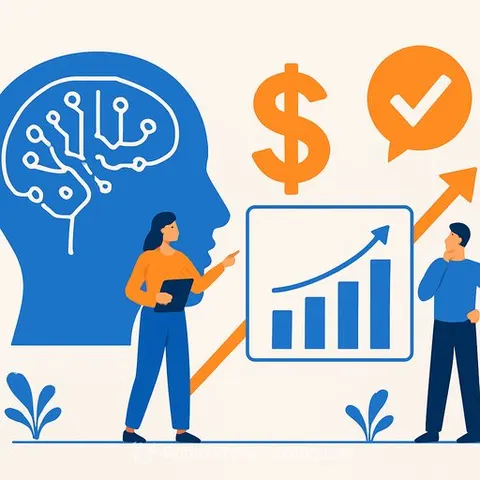
How to Measure AI's Real Value in Sales
Sales leaders often struggle to connect AI investments to concrete business outcomes. The problem isn't that AI doesn't work - it's that measuring its impact requires moving beyond simple cost calculations.
Early AI use cases in sales typically save time at the individual level. Meeting summarization tools, drafting assistance, and research helpers reduce the hours spent on administrative work. A rep using AI to summarize calls spends less time on manual note-taking. But translating those hours into cost savings misses the bigger picture.
The real question is whether time savings address actual productivity gaps in your organization. If your team struggles with follow-up consistency or research quality, AI that improves those specific areas has measurable value. If time savings simply disappear into busywork, the benefit is harder to quantify.
As organizations mature in AI adoption, the value shifts. Advanced use cases move beyond individual efficiency to increase what your entire sales function can execute. This requires more than new tools - it demands changes to how roles work and how processes flow.
At this stage, ROI metrics change. Instead of measuring time saved per person, you track organizational outcomes: how many more accounts your team covers, conversion rate improvements, or revenue growth. A sales team using AI for lead prioritization and outreach sequencing can handle larger territories or larger deal volumes with the same headcount.
Different AI investments generate different forms of value over time. The path from early productivity gains to organizational scale typically requires intentional process redesign and clear metrics tied to business goals, not just efficiency.
To get started, consider exploring AI for Sales training that covers how to structure AI adoption for measurable results. You might also review AI Productivity Courses to understand where time savings can genuinely move the needle in your workflows.