
AI news ·
Media industry grapples with AI copyright, credit and ownership questions at NAB Show
AI is reshaping film and TV production, but copyright law, credit rules, and content ownership haven't caught up. Studios are now auditing platform terms to avoid liability before signing on.
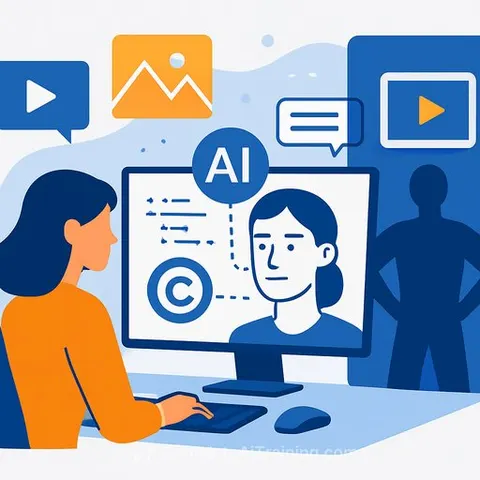
Media Industry Grapples With Copyright and Credit Issues as AI Spreads Through Production
The media and entertainment industry is confronting fundamental questions about ownership, authorship, and consent as generative AI moves from script development through post-production. Legal teams are now reviewing AI platform terms of use with the same rigor they apply to contracts with vendors and partners.
At NAB Show, panelists discussed how AI is already embedded across filmmaking workflows-from visual effects and localization to marketing and virtual production. The efficiency gains are real. Costs drop. Production timelines compress. But the legal and creative frameworks governing who owns the work, who receives credit, and what happens to underlying material have not kept pace.
Platform Terms Are the New Battleground
Mishawn Nolan, co-founder and managing partner at Nolan Heimann, said companies are now "platform shopping"-asking legal teams to evaluate what AI providers can do with their material, what disclosure obligations exist, and how the platform intends to use the content. Creators are gaining leverage to choose platforms that align with their risk tolerance and business models.
The calculus is straightforward: faster workflows and lower costs mean nothing if the terms of service expose studios or creators to copyright liability or strip them of ownership rights.
Three Questions Studios Cannot Avoid
The industry faces three overlapping problems. First, who owns work created with AI assistance-the studio, the tool provider, or the human creator? Second, how should credits work when AI contributes to a finished product? Third, how can companies ensure they have legal rights to the source material used to train or prompt AI systems?
These are not hypothetical. Studios are making production decisions now based on assumptions about the answers. Lawsuits are already being filed. Regulatory bodies in multiple countries are drafting rules.
Accountability and Provenance Matter as Much as Speed
The future of storytelling will depend less on what AI can generate and more on the governance frameworks studios and platforms put in place. Transparency about AI use, documented consent from creators and rights holders, and clear attribution are becoming competitive advantages, not compliance burdens.
For legal professionals in media, the work ahead involves mapping AI adoption across production pipelines, auditing platform agreements, and building policies that protect both creative rights and business interests. The industry that moves fastest on these questions will set the standards everyone else follows.
Learn more about AI for Legal professionals and the legal implications of Generative AI and LLM systems.