
AI news ·
Memorial Healthcare System integrates AI into clinical workflows to improve patient outcomes
Memorial Healthcare uses AI in health records to speed radiology diagnostics and flag high-risk patients. These tools automate tasks, giving physicians more time for direct care.
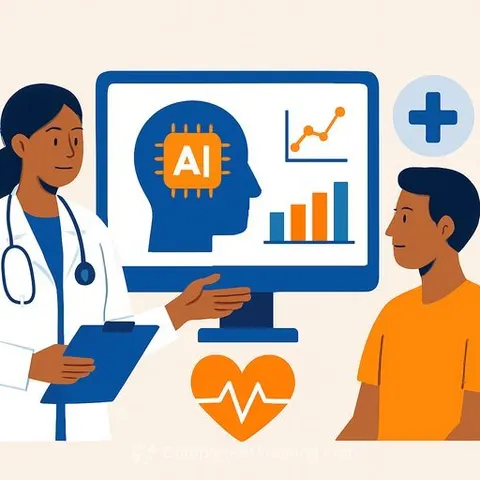
Memorial Healthcare System has deployed AI tools across its clinical operations, integrating predictive models and diagnostic support directly into electronic health records. The health system reports measurable improvements in diagnostic speed, particularly in radiology, and earlier identification of patients at risk for sepsis, acute renal failure, and hospital readmission.
The organization has embedded AI into clinical workflows to assist with summarizing patient histories, scanning radiology images, and prioritizing cases based on urgency. These tools surface key findings from test results, helping clinicians manage caseloads more efficiently while maintaining focus on safety and human-centered care.
Where AI is making a measurable difference
Predictive models now flag patients who may be at high risk before serious health events occur. Care teams use these alerts to intervene earlier and build more personalized care plans. In radiology, urgent cases get flagged sooner for review, which has led to faster decision-making and earlier intervention when clinically necessary.
The efficiency gains extend beyond diagnostics. By automating routine administrative tasks and delivering decision support tailored to individual patients, the tools reduce the clerical burden on physicians. Memorial reports improvements in clinician satisfaction and more time available for direct patient care. Physicians can review concise patient summaries, respond to patient advice requests using AI-assisted draft messages, and access evidence-based recommendations at the point of care. For professionals seeking to build expertise in these clinical AI applications, AI for Healthcare Courses cover the decision-support tools and predictive models now entering practice.
Governance, oversight, and earning clinician trust
Memorial established a multidisciplinary governance committee that includes clinical, technical, and compliance experts. Every AI solution undergoes evaluation for accuracy, transparency, and potential bias before deployment. New technologies are piloted in controlled settings, with feedback gathered from frontline clinicians prior to broader rollout. The health system also requires patient consent and thorough validation before any new AI tool goes live, with continuous monitoring afterward to track safety and effectiveness.
Physician engagement has proven critical to adoption. Clinicians respond positively when they see real-world benefits for both themselves and their patients. Training, transparency, and involving physicians throughout the implementation process helped build confidence in the technology's role within clinical care.
Keeping the human connection at the center
Dr. Jennifer Goldman, VP, CMIO and Chief of Primary Care at Memorial Healthcare System, said the technology must support rather than supplant clinical relationships. "AI should enhance, not replace, the human connection that remains at the center of medicine." Faster access to relevant information and evidence-based insights, she said, can lead to more meaningful conversations between clinicians and patients, better shared decision-making, and care that is tailored to the individual.
Looking ahead, Goldman pointed to advances in predictive analytics, remote patient monitoring, and conversational tools as areas with potential to further personalize care and improve health outcomes. She emphasized that success depends on thoughtful implementation and strong governance as much as on the technology itself.
Why this matters for healthcare professionals
Memorial's experience offers a practical model for integrating AI into clinical settings without sacrificing oversight or the clinician-patient relationship. For healthcare professionals evaluating or already using AI tools, the core lessons are concrete: insist on governance structures that review for bias and accuracy, demand integration that works inside existing EHR workflows, and push for pilot programs that collect real feedback before scaling. The technology is no longer theoretical - it is already changing how cases are prioritized, how risks are flagged, and how clinicians spend their time. Understanding how to evaluate and apply these tools responsibly is quickly becoming a required skill, not an optional one.