Meta Is Tying Performance to AI Skills: What HR Needs to Do Now
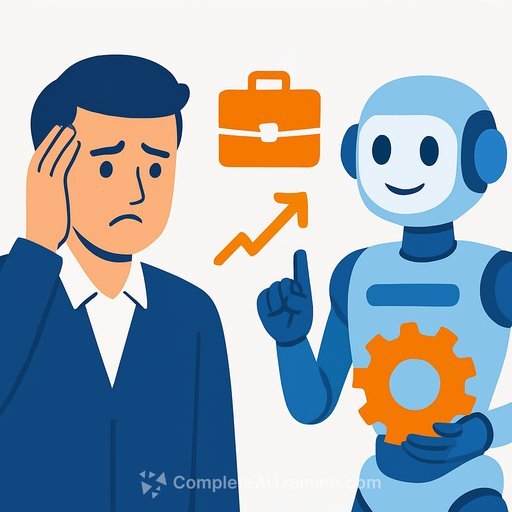
Meta will start rewarding "AI-driven impact" in 2025 and make it a core expectation in 2026. Employees won't be graded on raw AI usage next year, but they're expected to include AI wins in their self-reviews. Meta is also rolling out an "AI Performance Assistant" and allowing internal tools like Metamate and Google's Gemini to help write reviews.
This isn't isolated. Microsoft told managers that AI use is no longer optional, and Google's CEO urged employees to use it to stay competitive. The message for HR is clear: performance systems, hiring, and enablement need to reflect AI fluency and measurable impact.
What "AI-Driven Impact" Actually Means
Meta's focus is on outcomes, not vanity metrics. The goal: use AI to deliver results and build tools that move productivity in a meaningful way.
- Impact metrics: time saved per workflow, cycle-time reduction, defect rate decrease, quality uplift (NPS/QA scores), cost avoided, revenue influenced.
- Evidence: before/after baselines, benchmarks, reproducible prompts or playbooks, links to tools or automations, stakeholder feedback.
Performance Review Updates to Make This Quarter
- Add AI competencies to your rubric: problem framing, prompt quality, tool selection, data handling, iteration speed, and documented outcomes.
- Revise self-reviews to require: the problem, AI method used, baseline vs. result, time/cost impact, and lessons learned.
- Update manager guidelines to judge impact and reproducibility, not tool count or hours spent in an assistant.
- Clarify exclusions for 2025: no scoring of raw usage/adoption metrics, but record AI impact stories and artifacts.
Tooling and Enablement
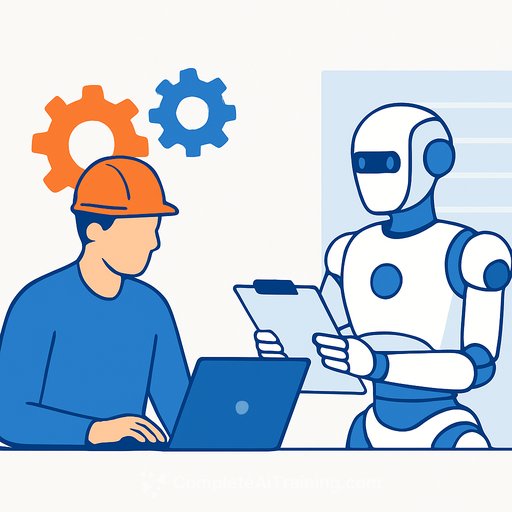
Meta is deploying an AI assistant for performance content and encouraging use of Metamate and Gemini. If you don't have internal tools, standardize on a short list and give people approved workflows.
- Standard kits: approved assistants, data-safe workspaces, prompt libraries, and templates for SOPs and self-reviews.
- Enablement: short, role-based training; 1-2 flagship use cases per team; office hours; and a shared library of "before/after" wins.
Guardrails, Fairness, and Compliance
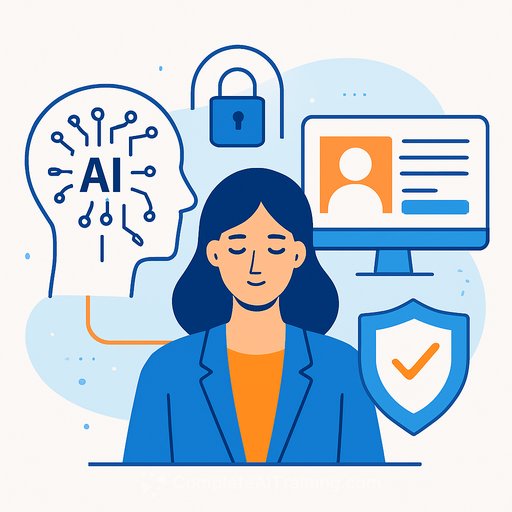
Moving performance and hiring closer to AI raises risk. Set guardrails that are simple, visible, and enforceable.
- Bias checks: managers must review AI outputs and own decisions; no auto-generated ratings.
- Data controls: ban sensitive or regulated data in public tools; log usage where necessary.
- Disclosure: require noting where AI was used and how results were validated.
- Legal: align with guidance on AI in employment decisions. See the EEOC's resource here.
Hiring Implications
Meta now allows candidates to use AI in coding interviews. Expect more applicants who prepare and perform with AI support.
- Policy: define what AI assistance is allowed during interviews and how candidates should disclose it.
- Signals to test: problem decomposition, prompt clarity, evaluation of outputs, and speed from draft to final.
- Artifacts: ask for prompt history and reasoning, not just the final solution.
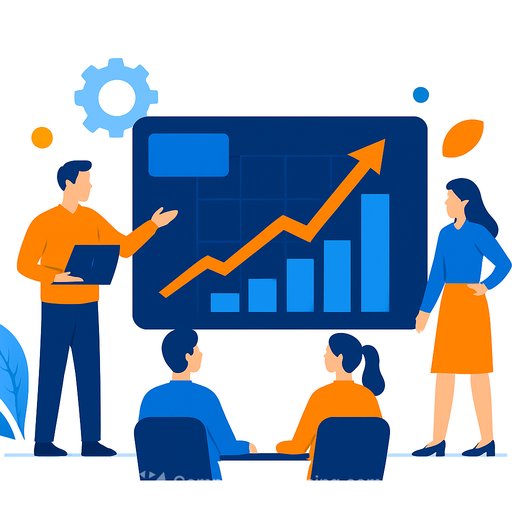
How to Measure AI-Driven Impact (Without Noise)
- Pick 3-5 metrics per function: e.g., support handle time, bug reproduction speed, content production time, campaign lift, cost per task.
- Require baselines: capture "before" for at least two weeks; compare apples to apples.
- Track reproducibility: store prompts, templates, and SOPs so others can repeat the win.
- Promote compounding wins: prioritize tools that benefit multiple teams over one-off tasks.
Change Management and Incentives
- Make it safe to try: weekly show-and-tell of small wins; reward the best shared playbook.
- Tie rewards to outcomes: celebrate time saved, defects reduced, and cross-team adoption.
- Reduce friction: one-click access to tools, clear data rules, and quick approvals.
30/60/90-Day HR Action Plan
- 30 days: add AI competencies to performance rubrics; publish allowed/blocked AI tools and data rules; launch a self-review template for AI impact.
- 60 days: pilot an AI-assisted performance-writing tool; collect 10-20 verified case studies; train managers on evaluating AI outcomes.
- 90 days: embed 3-5 function-specific metrics; update job descriptions; standardize interview AI policies; align rewards with documented impact.
Resources
- AI courses by job role to upskill teams on practical, role-specific use cases.
The signal is undeniable: impact with AI will be part of performance. Set the rules, teach the skills, measure what matters, and reward results that stick.
Your membership also unlocks: