
AI news ·
Mexico faces strategic choices on AI, talent and healthcare reform
Mexico's healthcare sector is restructuring around AI, talent, and operational reform-driven by cost pressure, not opportunity. Clinical shortages and outdated models are forcing executives to act now.
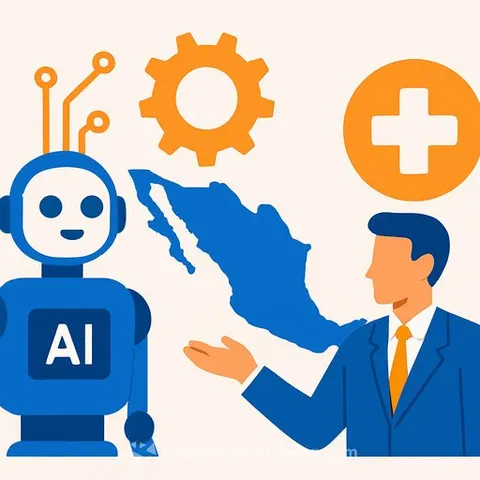
Mexico's Healthcare System Faces Critical Inflection Point on AI, Talent, and Operations
Mexico's healthcare sector is entering a decisive phase. After years of capital withdrawal and caution, senior leaders are now rebuilding around three priorities: structural reform, operational artificial intelligence, and a redesign of how care is delivered. The shift isn't driven by abundance-it's driven by pressure.
Clinical talent shortages, rising costs, sustained demand, and outdated operating models are forcing change. The question for healthcare executives isn't whether these pressures will arrive; it's whether the system can integrate them within a historically fragmented environment with limited public funding.
AI Is Already Operating, Not Just Promised
Artificial intelligence has moved past the prototype stage. Administrative agents, automated clinical documentation systems, and decision support models are running now in hospitals, clinics, and care networks across the sector.
For Mexico, this distinction between promise and execution matters. The real problem isn't technology-it's systemic efficiency. Doctors spend hours on administrative work. Hospitals generate data that consumes time without clinical value. Processes add friction without improving outcomes.
In this context, AI becomes basic infrastructure for productivity, not a luxury. International evidence shows these systems don't replace healthcare workers; they free them to work at their highest professional level. For a country with a relative shortage of doctors and nurses per capita, this shift from competitive advantage to operational necessity is direct: broader access and higher quality care.
Infrastructure Without Operations Is Idle Capacity
Global markets confirm a consistent pattern: pharmaceutical and medical device innovation advances rapidly, while effective service delivery remains the bottleneck. Large hospital systems in the UK and US are reconfiguring toward leaner models-outpatient care, short-stay surgery, technology-supported processes, and data-driven decisions.
Mexico faces a strategic paradox. New infrastructure is clearly needed. But the shortage of talent to operate these models efficiently is intensifying. Without an operational shift, expansion risks becoming unused capacity or financially unsustainable.
The opportunity lies in turning this paradox into advantage: building infrastructure while simultaneously redesigning how it operates.
Talent Is the Real Constraint
Talent has become the main structural constraint on healthcare systems globally and in Latin America. Clinical training in Mexico remains misaligned with modern operational realities. Medical schools don't emphasize management, digital systems, data-driven decision-making, or interdisciplinary collaboration.
New care models demand leaders who master medicine and organizational complexity. Without ongoing training and leadership development, technology remains underutilized, poorly implemented, or resisted by those who must adopt it.
The challenge is no longer technological. It's one of leadership and governance.
Regulation Must Match the Pace of Change
Healthcare industry leaders express cautious optimism, particularly around pharmaceutical processes and regulatory inclusion in essential medicines lists. The question is whether Mexico can move toward regulation that relies on technology, data, and impact criteria rather than administrative procedures.
Speed has become competitive. In an environment of growing needs, regulatory slowness translates into social and strategic costs that management teams can no longer absorb.
Four Questions Define the Next Phase
Healthcare executives and boards are already working through these decisions:
- How is clinical and management talent developed for modern healthcare?
- How is technology adopted at scale and actually used?
- How is regulation implemented to enable rather than obstruct?
- How is the system financed sustainably?
These aren't theoretical questions. CEOs and boards are rewriting their agendas around them right now.
Mexico isn't starting from scratch. International models exist and are producing results. The task is learning in time, with realistic understanding of local context. The new era of healthcare has already begun. The question is whether Mexican healthcare leaders will be prepared for it.
For executives navigating this transformation, understanding AI for Executives & Strategy provides frameworks for these operational decisions. Sector-specific guidance is available through resources on AI for Healthcare.