Microsoft signals headcount growth after an AI reset
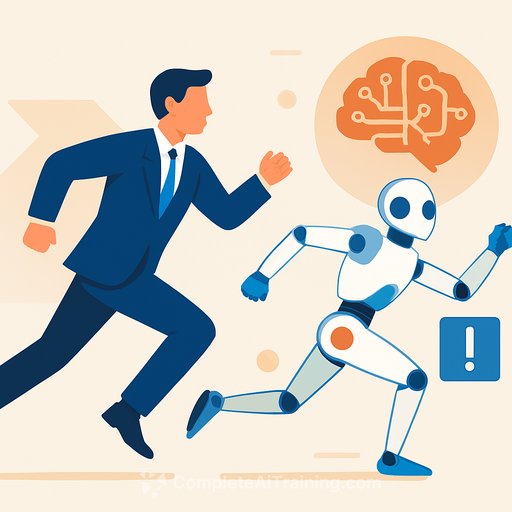
Microsoft plans to start growing its employee base again, according to CEO Satya Nadella. He told investor Brad Gerstner on the BG2 podcast that hiring will resume after a year of "unlearning" and "relearning" how work gets done with AI.
The workforce held flat at 228,000 in the fiscal year that ended in June, after multiple rounds of layoffs took out at least 6,000 roles. Another 9,000 were cut in July. Nadella's message: hiring will return, but with more leverage per employee than before AI.
- Why it matters: Teams will be expected to deliver more with AI tools before headcount expands.
- Timeline: About a year of retraining and workflow redesign, then measured hiring.
- Context: OpenAI's ChatGPT hit in 2022; Microsoft's headcount grew 22% that fiscal year. Today, Microsoft is prioritizing AI-fueled productivity before adding net new roles.
AI first, then hiring: What Nadella is signaling
Nadella said employees will adopt AI across core workflows using Microsoft 365's Copilot and GitHub Copilot, which draw on models from OpenAI and Anthropic. Once teams show higher output and efficiency, hiring will accelerate with "max leverage."
He compared the shift to the move from faxed memos to email and Excel decades ago. "Any planning, any execution, starts with AI," he said.
One internal example: a Microsoft leader overseeing fiber networking couldn't hire fast enough for data center growth, so the team built AI agents to handle maintenance. Fewer manual tickets, faster resolution, and more uptime-without adding the same number of heads.
Signals for HR and management
- Workforce planning: Expect headcount growth to follow, not precede, AI productivity gains. Budget for tools, training, and pilots before net hiring.
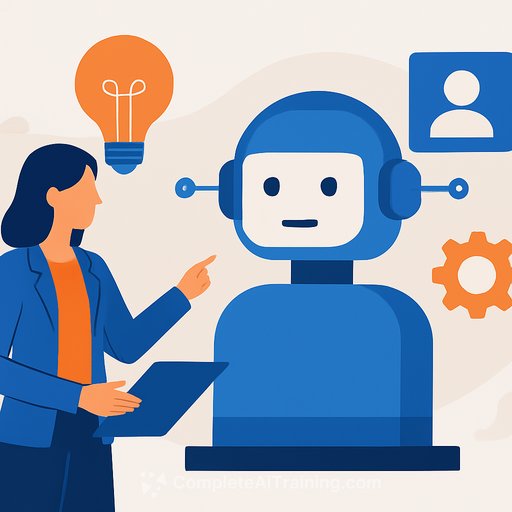
- Role redesign: Shift job descriptions from "do the task" to "design and supervise the system that does the task." Embed AI into SOPs.
- Hiring focus: Fewer generalists; more AI-fluent operators. Think AI platform engineers, data/ML ops, automation leads, product managers who ship AI-assisted features, and managers who can run AI-augmented teams.
- Performance baselines: Measure current cycle times, throughput, and quality now. You'll need before/after data to justify new headcount.
- Governance: Put usage policies, data security, and review loops in place as AI agents take on operational work.
Industry backdrop
Microsoft reported 12% year-over-year revenue growth and its widest operating margin since 2002. Azure revenue jumped 40%, reflecting strong cloud and AI demand.
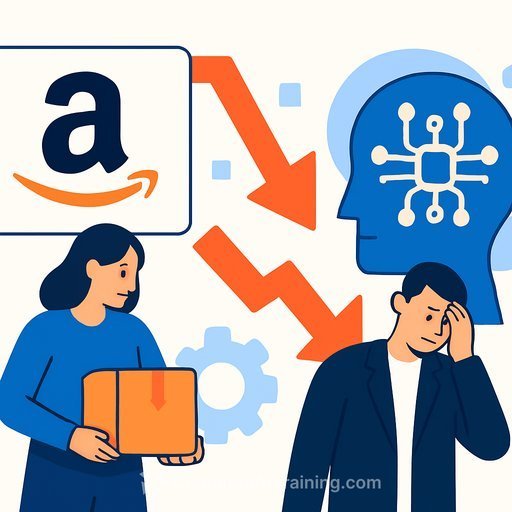
At the same time, Amazon cut 14,000 corporate roles, citing the speed of AI adoption. Translation: companies are consolidating and automating before they scale hiring again.
90-day playbook for HR and team leads
- Weeks 1-2: Identify the top five repetitive workflows per team. Capture baseline metrics (time per task, error rates, handoffs).
- Weeks 3-6: Pilot Microsoft 365 Copilot for knowledge work and GitHub Copilot for engineering. Define "done" with clear acceptance criteria.
- Weeks 7-10: Stand up one AI agent per function (support triage, procurement routing, maintenance checks). Keep humans in the loop.
- Weeks 11-12: Compare results to baselines. Lock in SOPs, update job descriptions, and decide where headcount makes sense.
Where roles are likely to grow
- AI platform and data ops: Building and maintaining AI services, data pipelines, evaluation, and monitoring.
- Infrastructure operations: Data center buildout, networking, and reliability engineering-often with AI agents in the toolchain.
- Security and compliance: Model safety, data governance, access control, and audit.
- Product and program management: Shipping AI-assisted features, measuring outcomes, and iterative rollout.
- Developer productivity: Engineering managers and enablement leads standardizing Copilot usage and automation.
Metrics to prove "more with less"
- AI-assisted adoption rate per team (weekly active users, tasks completed with AI)
- Time-to-complete and throughput per key workflow
- Quality: defect rates, rework, and customer satisfaction
- Cost-to-serve: cloud/AI spend per unit of output
- Revenue or feature velocity per FTE
Practical resources
- Microsoft Copilot for knowledge work, planning, and communication.
- GitHub Copilot docs to standardize developer workflows and measure impact.
- Complete AI Training: courses by job to upskill managers, HR, and technical teams in parallel.
Bottom line
Nadella's message is clear: make AI the default way of working, prove the lift, then staff up. For HR and managers, the winning move is to formalize AI-assisted workflows now-so when hiring returns, every new role multiplies the output of the system you've already built.
Your membership also unlocks: