AI can already do 12% of the work. HR decides what happens next
AI is no longer a vague trend drifting in from California. New modelling from MIT's Project Iceberg estimates today's systems can already perform tasks worth 11.7% of the US wage bill - about US$1.2 trillion. That's work equal to almost 18 million full-time jobs.
Australia's mix of finance, professional services, health, education and public administration makes the signal hard to ignore. If AI can do this much in the US, similar capabilities are landing here - and in many offices, they've already arrived.
What the Iceberg Index actually measures
Project Iceberg simulates the US workforce: 151 million workers across 923 occupations, tagged to 32,000 skills and spread over 3,000+ regions. Its core metric, the Iceberg Index, measures technical exposure - the share of an occupation's wage bill tied to tasks AI can already perform at a usable level.
Key point: exposure is not the same as layoffs. The index shows where AI could take over tasks today if leaders choose to adopt and integrate. For HR, that turns the 11.7% figure into a set of decisions, not a fate.
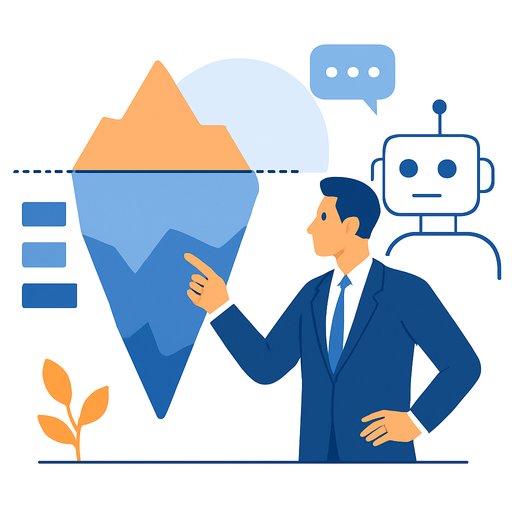
The visible tip vs what sits below the waterline
Public focus has been on tech teams and code tools. Iceberg calls this the "Surface Index" - around 2.2% of total wage value (about US$211 billion) based on current adoption in computing jobs. Useful, but small.
Below the surface is the quiet bulk: cognitive automation across admin, finance and professional services. That brings exposure to 11.7% (about US$1.2 trillion). In plain terms, AI is already strong at routine white-collar work - document handling, reconciliation and reporting, back-office coordination, and standard analysis.
Australia's banks, super funds, law and accounting firms, hospitals, universities, logistics providers and public agencies are built on exactly these task types.
Tasks most exposed right now
- Document processing and data extraction in financial services and insurance
- Back-office administrative work in health, education and government
- Routine financial analysis, reconciliation and reporting
- Workflow coordination and scheduling across large organisations
Financial institutions are already using AI for document processing and analytical support. Health systems are automating admin to free up clinicians. Roles that feel this first: claims officers, payroll and billing, junior analysts, paralegals, coordinators, contact-centre staff, and early-career assistant or associate positions.
Most jobs won't disappear; the task mix will. AI handles standardised volume. People handle exceptions, clients and judgement. It still feels like the ground is moving under your team - because it is.
Why HR can't leave this to IT
- Exposure is granular. The model's skills view shows that GDP, income and unemployment explain less than 5% of variation. Headcount metrics won't reveal where exposure lives. Task maps will.
- The productivity race won't stay in Silicon Valley. Gains depend on how fast organisations turn capability into tools, workflows and adoption. Australian firms competing globally won't ignore a 10%+ efficiency swing. The real choice is whether those gains fuel growth and better jobs - or just cuts.
- HR's legacy is how exposed workers are treated. Iceberg doesn't tell you who to let go. It shows where you have options: redeploy, reskill, redesign - or restructure. HR owns that pathway.
Read this through an Australian lens
The data is US-based, but the question is universal: where do current AI systems overlap with what people are paid to do? In Australia, you also have awards, enterprise agreements and consultation duties. That raises the stakes for how you plan, communicate and execute change.
Review obligations via the Fair Work Ombudsman and bake them into your program design from day one. Genuine consultation beats last-minute announcements.
What to do this quarter
- Map task-level exposure. Break priority roles into tasks. Tag anything that looks like Iceberg-style exposure: document processing, standard analysis, routine compliance checks, basic drafting. Even rough estimates beat guesswork.
- Create an AI transition framework. Agree principles before pilots scale: redeployment priorities, retraining budget per exposed FTE, role redesign timeframes, and how changes are communicated to employees and unions.
- Shift from jobs to skills. Build a skills inventory, fund targeted learning, and open internal moves from high-exposure tasks into growth work like client advisory, complex case management, change and implementation.
- Update board reporting. Add a simple indicator: the share of labour spend tied to highly exposed tasks. Track pilot-to-scale gates, guardrails, and workforce impacts alongside cost and productivity.
- Put controls in place. Standards for data privacy, accuracy checks, human review, and incident handling. Make managers accountable for safe use and outcomes.
Metrics that keep you honest
- Share of wage spend tied to exposed tasks (by function and site)
- Cycle-time reduction and error rates in automated processes
- Redeployment rate and time-to-placement for exposed employees
- Training hours and certifications per exposed FTE
- Employee sentiment in impacted teams (before/after)
The moment to act is short
The window to treat AI as "later" is closing. In Australia, it's tighter still - squeezed by global competition and local expectations for decent work and fair treatment.
AI can already do a meaningful slice of what people are paid to do. Whether this becomes a story of managed transition or messy disruption depends on choices HR makes now - before the iceberg fully breaks the surface.
Fair Work Ombudsman - review consultation and change obligations.
Complete AI Training: Courses by job - build targeted upskilling paths for exposed roles.
Your membership also unlocks: