Monta AI puts proactive intelligence at the core of EV charging operations
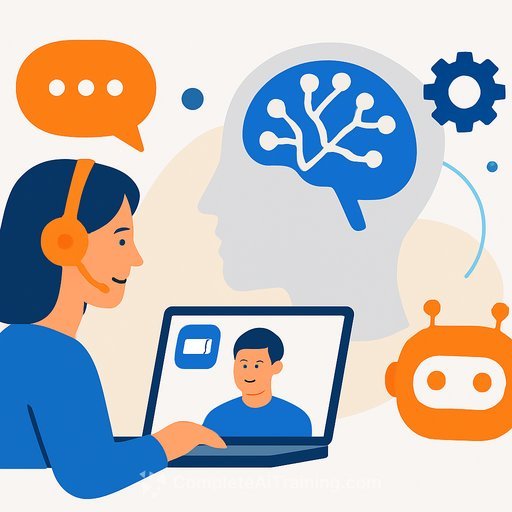
Monta announced Monta AI - a proactive operational intelligence layer built into its platform - to help teams run EV charging networks without the daily drag of manual triage. It analyzes live operations, flags anomalies, and recommends actions you can execute immediately. No specialist tunnel required.
What it does
Monta AI turns raw operational data into clear, actionable insight directly inside the platform. It can suggest targeted firmware updates to improve reliability, detect and act on fraud patterns, and answer natural-language questions across operations, performance, pricing, expansion, and energy management. It even supports site selection scenarios that weigh equipment compatibility and nearby competition. Monta is including this capability for all customers at no extra cost.
As CEO and co-founder Casper Rasmussen put it, the goal isn't faster busywork - it's enabling operators to do what wasn't realistic before with growing network complexity. The system proactively surfaces what matters so your team can act, not sift.
Why it matters for Support and Ops
One failed charging session can burn hours combing through OCPP logs, firmware versions, payment traces, and hardware docs - typically by a handful of experts. Multiply that by a network growing three to ten times and you get a slow, fragile model. Monta AI synthesizes scattered signals into one intelligence layer, explains what's wrong, pinpoints root causes, and recommends next steps. You stay in control of execution.
For Support, the lift is immediate: Monta says the system resolves 79% of driver queries proactively without handing off to a human. That cuts queue volume, reduces handle time, and keeps drivers moving.
Proof in production
In one production case, Monta AI found a firmware mismatch behind repeated failures on a DC charger. It calculated that fixing the mismatch would raise the success rate from 31.2% to 98.3% - identified within 25 seconds. That's the kind of targeted guidance that moves the needle on uptime and customer experience.
Built on real network data
Monta AI learns from live activity across more than 260,000 connected charge points, 3 million monthly sessions, and 14,000 monthly support requests. Existing AI capabilities on the platform - automated support resolution and AI-powered diagnostics - are now unified through a conversational interface that keeps improving as the network grows.
Use cases across the lifecycle
- Operational diagnostics: Surface anomalies, explain issues, and recommend fixes grounded in data.
- Reliability: Identify firmware/version drift, hardware-specific failure patterns, and payment edge cases.
- Performance and pricing: Analyze utilization and pricing impact to reduce congestion and idle time.
- Expansion planning: Evaluate site fit by equipment, local demand, and competitive presence.
- Energy and load: Understand load patterns to inform scheduling and peak avoidance.
- Customer support: Proactively resolve the majority of driver issues with real-time troubleshooting.
How to put it to work this week
- Prioritize high-impact alerts: focus on chargers/sites with the largest reliability and revenue gaps.
- Set clear approval paths: define who reviews and executes recommended actions like firmware updates.
- Standardize prompt patterns: share a short list of natural-language questions frontline teams can reuse for triage.
- Close the loop: log which recommendations were accepted, the outcome, and time-to-resolution to improve future guidance.
Metrics to watch
- Session success rate (by site, model, firmware)
- Mean time to resolution (MTTR) for charger incidents
- Ticket deflection rate and first-contact resolution
- Firmware/version drift across the fleet
- Fraud detection rate and recovery
- Driver satisfaction after assisted vs. proactive resolutions
Under the hood, much of this work depends on the Open Charge Point Protocol and related diagnostics. If your team wants a primer, see the Open Charge Alliance's overview of OCPP.
Monta's direction is clear: move from reactive firefighting to proactive operations, with software coordinating fault resolution, optimization, and network decisions - while humans stay in control. For Customer Support and Operations leaders, that's fewer blind spots, faster resolutions, and a cleaner path to scale.
Upskill your team for AI-driven ops
If you're building internal capability around AI for support and operations, explore practical training and certifications focused on automation and frontline workflows: AI Certification for AI Automation and courses by job role.
Your membership also unlocks: