
AI news ·
More managers support replacing workers with AI as HR leaders urged to set clear expectations
35% of managers now view replacing employees with AI as good for their company, up from 23% last year. HR leaders are being urged to set clear policies before workforce decisions outpace what AI can actually deliver.
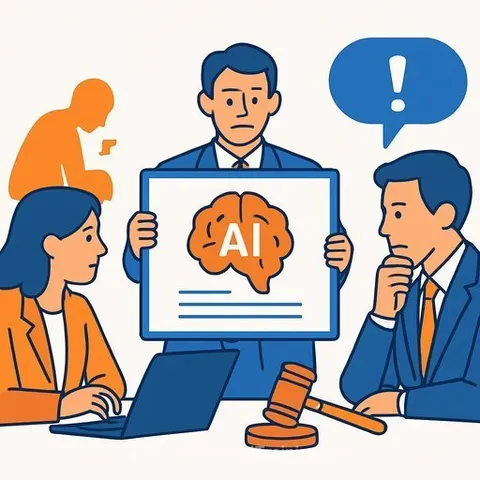
Managers increasingly see AI as a way to replace workers, HR leaders urged to set boundaries
A growing share of managers view replacing employees with AI tools as financially sound, according to new research. The shift has prompted HR leaders to establish clear policies on how AI should be used in the workplace.
Beautiful.ai released findings showing that 35% of managers agreed replacing employees with AI is good for their company in 2026. That's up from 23% in 2025.
The preference runs deeper. Forty-two percent of managers believe it would be financially beneficial to replace large numbers of employees with AI. Thirty-seven percent said multiple people on their teams could be replaced by the technology.
Jason Lapp, CEO at Beautiful.ai, cautioned against reading too much into the numbers. "Replacing people may look attractive on paper, but it often ignores how work actually gets done," he said. "The fact that many managers see replacement as financially attractive tells you they're under pressure, not that it's the right long-term move."
The pressure to act on unproven capabilities
Managers cite efficiency gains, not cost-cutting, as their primary reason for AI adoption. But improved output from the technology is reshaping what they believe is economically possible.
Other AI experts have warned against moving too fast. Thomas Davenport and Laks Srinivasan, leading researchers on AI in business, cautioned leaders earlier this year against headcount reductions based on unproven AI capabilities. "Don't make workforce decisions based on AI potential that hasn't been proven yet," their report said. "Getting ahead of what AI can actually deliver today creates risk, not efficiency."
What HR leaders should do now
Lapp said HR leaders should focus on defining how work changes, not just who does it. That means setting clear expectations for AI use, investing in reskilling programs, and giving managers tools to lead through the transition.
Companies that treat AI only as a cost reduction tool risk damaging employee trust. Those that treat it as a way to multiply what people can do, paired with thoughtful workforce strategy, will build lasting competitive advantage, according to the research.
For HR professionals navigating this shift, resources on AI for CHROs and AI for HR Managers cover workforce planning and talent management strategies specific to AI adoption.