
AI news ·
More than 99% of executives expect AI to lead to layoffs within two years
Over 99% of executives expect AI to cause layoffs, threatening entry-level roles. Yet year-to-date AI job cuts reached 49,135 without guaranteeing better business performance.
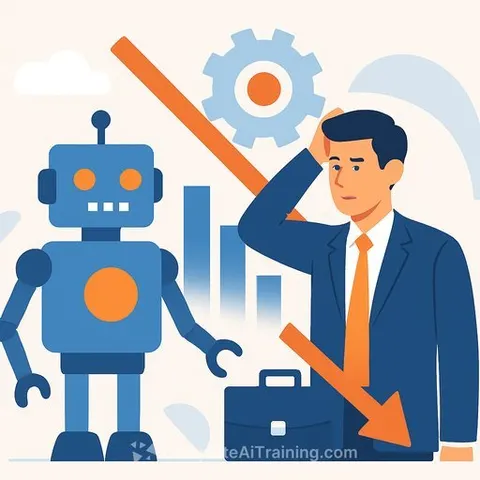
More than 99% of executives expect artificial intelligence to cause layoffs at their organizations within the next two years, according to Mercer's latest Global Talent Trends report, yet only about one-third believe their companies can effectively blend human and machine capabilities. The gap between ambition and preparedness is widening as companies accelerate AI adoption - a disconnect that could expose entry-level workers and undermine the promised gains from automation.
Entry-level jobs under mounting pressure
The survey findings arrive as concerns intensify over the future of early-career positions. AI is increasingly handling routine and repeatable tasks that once served as training for new hires. The proportion of companies reducing junior roles jumped from 17% to 43% within a single year, according to the research.
Employees aged 22 to 27 face some of the highest displacement risks as organizations automate administrative, analytical and operational work. The trend is altering how human resources teams plan talent pipelines, with early-career hiring decisions already being adjusted. Employee thriving levels also fell from 66% in 2024 to 44% in 2026, the survey found.
Business case for AI layoffs questioned
While workforce reductions are becoming more common, evidence that AI-related layoffs consistently improve business performance remains limited. AI has become the most frequently cited reason for layoffs in 2026, but research from Gartner suggests that headcount reduction does not automatically lead to stronger financial returns or productivity gains.
The research found similar workforce reduction rates among organizations reporting strong AI returns and those reporting weaker outcomes. Several experts cited in the reports suggested that organizations often achieve better results when AI is used to augment employee capabilities rather than replace them outright.
Rising volume of AI-linked job cuts
The debate unfolds against a backdrop of rising AI-driven workforce reductions. In the United States, AI was referenced in 21,490 job cuts during April 2026 alone, accounting for about 26% of all layoffs recorded that month. Year-to-date AI-related layoffs reached 49,135, nearly matching the total for all of 2025.
Major technology companies, including Meta, Oracle, Salesforce and Block, have announced job reductions linked to AI-driven restructuring and automation initiatives. The growing numbers show that AI is no longer a future workforce challenge but an active factor driving hiring and talent strategies today.
Why this matters for Executives and Strategy
As AI adoption accelerates, organizations face a choice between using technology primarily as a cost-reduction tool or as a means to boost workforce productivity. The Mercer findings make clear that many executives anticipate layoffs, but reducing headcount alone may not deliver the expected value. The companies that succeed will likely invest in workforce models that blend human talent with machine efficiency, particularly at entry levels where talent development is at risk. For leaders navigating this shift, resources such as AI for Executives & Strategy provide guidance on aligning AI adoption with long-term workforce planning.