
AI news ·
More than half of organisations have made a bad AI hire in the past year, report finds
Over 50% of organisations hired someone in the past year who talked confidently about AI but couldn't apply it on the job. Experts say the fix is testing for AI skills combined with domain expertise, not one without the other.
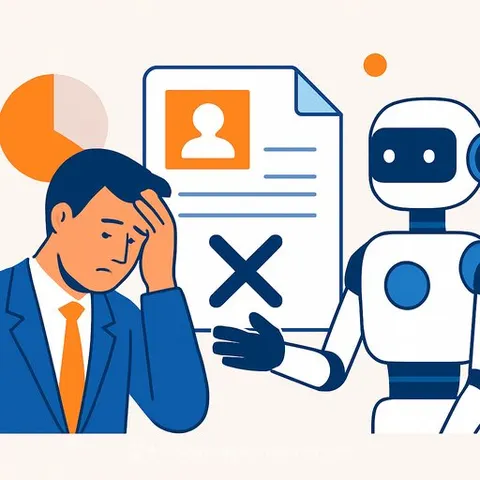
More than half of organisations hired someone fluent in AI jargon who couldn't apply it
Over 50% of organisations have made a "bad AI hire" in the past year, according to a new report. These are candidates who talk confidently about AI tools and concepts during interviews but fail to use that knowledge effectively once hired.
The problem stems from a shift in hiring priorities. Employers now favour candidates with strong AI fluency over those with deep expertise in their actual domain.
But that's not the real issue, according to Wouter Durville, CEO of TestGorilla, which conducted the research.
"The right framing isn't AI skills vs. domain skills. It's AI skills applied to domain skills," Durville said. "Hire for the combination. The 'bad AI hire' problem is what happens when you optimise for one without testing for both."
Three gaps in modern hiring
TestGorilla identified three critical flaws in how organisations assess AI competence:
- Setting the minimum bar at tool awareness alone
- Leaving AI assessment to individual hiring managers without a shared standard
- Evaluating communication skills instead of actual execution ability
Candidates get hired for speaking fluently about AI workflows without ever having audited an output or redesigned a process.
How to spot genuine AI fluency
Durville suggested three approaches to identify candidates who can actually apply AI knowledge:
- Ask about failure. How have they handled situations where AI got it wrong? Real fluency shows up in judgement, not vocabulary.
- Test critical evaluation. Can they spot a hallucination? Can they identify when AI output is technically correct but contextually wrong?
- Use structured skills assessments. Include tasks that mirror real work. A genuinely fluent candidate will outperform someone who only knows the jargon.
Fixing the problem if you already have a bad AI hire
Bad AI hires cost organisations in lost output, failed projects, and rehiring expenses. If you suspect someone in your team fits this profile, start with a skills audit.
"Use objective assessments, if they weren't part of the hiring process, to establish a baseline now," Durville said. "It removes subjectivity from the diagnosis, creates a documented development plan, and - if the gap proves unresolvable - builds the evidence base you'll need to make harder decisions fairly and defensibly."
Map where the person is expected to use AI and how they should use it properly. Most bad AI hires fail because no one defined the standard at the point of hire.
Targeted upskilling often works better than replacement. "But only when the gap is clearly defined," Durville said. "Blanket 'AI training' rarely moves the needle. Role-specific, output-focused development does."
For HR leaders looking to strengthen recruitment practices around AI competence, resources like AI for CHROs (Chief Human Resources Officers) and AI for HR Managers provide frameworks for implementing better assessment and hiring processes.