
AI news ·
Most parents say creativity will matter more for their kids as AI grows, survey finds
73% of parents say creativity will matter more for their kids than past generations, but only 22% of children share parents' fears that AI will hurt creative thinking.
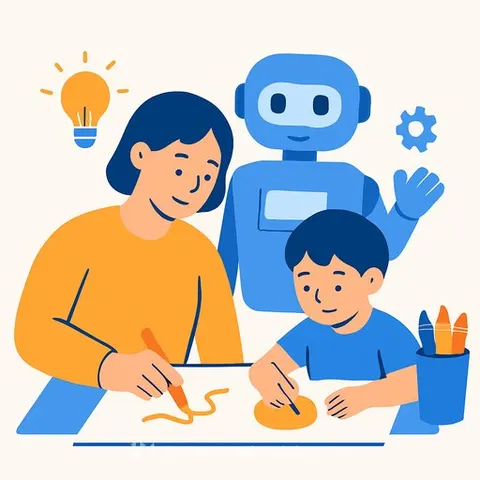
Parents see creativity as shield against AI, but kids aren't worried
Seventy-three percent of parents believe creativity will matter more for their children than it did for previous generations, according to a survey of 2,000 parents and children ages 8 to 12. The study, commissioned by Crayola and conducted by Talker Research between December 19 and 23, 2025, reveals a sharp generational divide over how artificial intelligence will affect young people's creative abilities.
Parents worry. Thirty-five percent fear AI will reduce their child's ability to think creatively, and 30 percent worry machines will compete for jobs their children might otherwise fill. Only 22 percent of children share those concerns about AI damaging their creative thinking, and 21 percent fear job competition.
The anxiety reflects a deeper belief: 85 percent of parents agree that creativity equals success in their child's future. Eight in 10 parents also admitted they wish adults had done more to nurture their own creativity growing up.
Hands-on beats digital, and kids know it
Despite growing up online, children still crave physical creative work. When kids make something by hand rather than digitally, they're more likely to keep it (46 percent), display it at home (68 percent), or give it as a gift (48 percent).
The difference matters. Physical creations become tangible, lasting, and meaningful in ways digital work often doesn't.
How adults respond shapes whether kids keep creating. Children said they're most motivated when parents create with them (65 percent), display their work (45 percent), and acknowledge the effort involved (46 percent). Surprisingly, telling kids their art looks good ranks last at 22 percent-praise that feels like judgment kills motivation rather than builds it.
Cheri Sterman, senior director of education at Crayola, said: "When we emphasize effort, process and thinking over outcomes, kids feel safer taking creative risks."
What kids actually ask for
Children offered direct requests for how adults could better support their creativity:
- Ask for their ideas and listen (52 percent)
- Provide supplies for creating (51 percent)
- Encourage problem-solving (47 percent)
- Give more time to create (46 percent)
Kids also said they're inspired by creative role models-authors, athletes, astronauts, entrepreneurs-who show that imagination extends beyond art class into every field.
Obstacles they identified include societal pressure to fit in (37 percent), emphasis on perfection over exploration (20 percent), and focus on doing things "the right way" instead of imaginatively (36 percent).
Weave creativity into daily life
Parents don't need special programs or expensive materials. The survey found families integrating creativity into ordinary moments: sketching during walks, drawing new book covers, making up song lyrics, inventing story endings, planning meal theme nights, and playing "what if."
One parent summed it up: "We try to build creativity into ordinary moments-making up stories at bedtime, cooking together and experimenting, or turning errands into small games. Keeping it low-pressure helps creativity feel natural."
Parents also recognize creativity as a practical skill. More than half (52 percent) believe it influences all aspects of life. Creative individuals were seen as stronger problem-solvers (49 percent), better communicators (35 percent), and more likely to succeed in careers (34 percent).
Sterman said: "As AI continues to insert itself into our lives, this study suggests that creativity won't disappear, but warns that nurturing it must be intentional. For parents and educators, the challenge isn't resisting technology, but ensuring imagination, experimentation and original thinking remain central to how children grow up alongside it."
For creatives managing teams or mentoring younger talent, the research offers a clear framework: AI for Creatives tools can handle routine work, but the work of nurturing creative thinking requires the opposite of what AI does-it requires listening, process-focused feedback, and space for exploration.