
AI news ·
Most physicians warm to AI, but trust in health systems' strategy remains low
Only 39% of healthcare workers trust their org's AI strategy, though 3 in 4 physicians now use AI comfortably. This gap matters as AI could ease documentation-driven burnout.
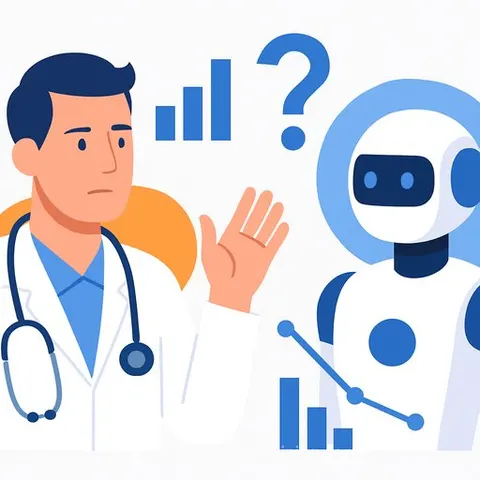
Nearly three in four physicians now say they are comfortable using artificial intelligence, up from fewer than half just a year ago. Yet only 39% of healthcare workers trust their organization's AI strategy, according to the Qualtrics 2026 Healthcare Trends Report. The widening gap between individual readiness and institutional trust arrives just as AI tools offer the first practical chance to reduce the documentation burden driving a stubborn burnout crisis.
Healthcare has spent decades adding capability and layering administrative complexity onto clinicians' workloads. The average physician now spends more time on documentation than on patients. Previous technology promised relief but mostly created more tasks. AI could reverse that trend-if health systems deploy it in ways that earn trust from the people who use it.
The burden AI could actually lift
One in three healthcare workers reports experiencing burnout. The number has barely moved despite heavy investment in wellness programs, because those efforts treat burnout as an individual problem. The real drivers are systemic: unmanageable workloads, limited response to feedback, and cultures where raising concerns feels unsafe.
Documentation remains a pervasive drain. Clinicians lose hours each day to administrative tasks that pull them away from patients. AI-generated portal messages, discharge summaries, and ambient listening present a different kind of promise: technology that removes work instead of adding to it.
Progress and potential are not the same thing. Some ambient listening tools save time for clinicians, but research also shows they can push billing codes higher and reduce patients to a list of problems. AI-generated messages sometimes lack context, asking patients to call the office anyway-creating more work for everyone. Tools that don't deliver clear value won't get used.
What thoughtful implementation looks like
The Qualtrics 2026 Healthcare Trends Report provides a snapshot of this moment in AI for Healthcare. Community Health Network in Indianapolis took a focused approach. Instead of rolling out AI broadly and counting adoption metrics, teams identified specific friction points: patients with unresolved questions after visits, gaps in primary care connection, delays in routing patient needs, and volumes of employee experience data that were hard to parse.
Automated conversational outreach closed loops after visits, exploring unresolved needs. Patients who lacked a primary care connection received targeted follow-up, leading thousands to seek additional care. AI extended the reach of clinical teams where human capacity had run out.
The same pattern holds outside healthcare. Lawn care company TruGreen assumed pricing was driving customers away based on annual surveys. Analyzing 500 million customer signals across channels revealed the real driver was trust: people didn't believe the service was delivered as promised. AI agents spotted at-risk customers and resolved issues in real time, handling 51% of concerns automatically in the first week.
Culture predicts success more than budget
Clinicians engage with new tools when they feel safe speaking up, testing ideas, and challenging what isn't working. According to Qualtrics research, the single strongest predictor of AI readiness is whether a clinician's direct leader rewards risk-taking. Communication quality, trust in senior leadership, and freedom to try new things follow closely behind.
"When it isn't safe to be wrong, fear wins, no risks are taken, and creativity dies," the report states. About half of healthcare workers globally say they feel psychologically safe at work. That is a crisis that predates AI and will outlast it, but it directly shapes whether AI implementations succeed or fail.
Organizations that want AI to improve care must create conditions for honest engagement. That means involving clinicians and patients in design decisions, defining measurable outcomes before deployment, and treating negative feedback as data to refine the process-not as resistance to overcome.
Why this matters for healthcare professionals
Clinicians have accepted AI faster than almost anyone predicted. The harder question is whether health systems can build the trust, with their own workforce and patients, to deploy it in ways that make care better. Patients are not waiting for a resolution. They are turning by the tens of millions to consumer AI tools for health guidance and ongoing care, often without informed consent processes that go beyond a sign on the wall or a checkbox during registration.
The opportunity for healthcare professionals is to demand implementation that starts with the problems staff and patients actually experience-documentation overload, fragmented follow-up, absent presence during visits-and measures success by whether those problems shrink. When AI works well, benefits compound across thousands of interactions. When it doesn't, so do the failures. Your willingness to engage honestly with these tools, and your organization's willingness to listen, will determine which outcome prevails.