
AI news ·
Most teachers receive no formal guidance on AI use in schools, Gallup study finds
82% of teachers get no formal guidance on using AI in classrooms, per a new Gallup/Walton Family Foundation survey of 2,000+ K-12 public school teachers. Lower-income schools face the widest gaps.
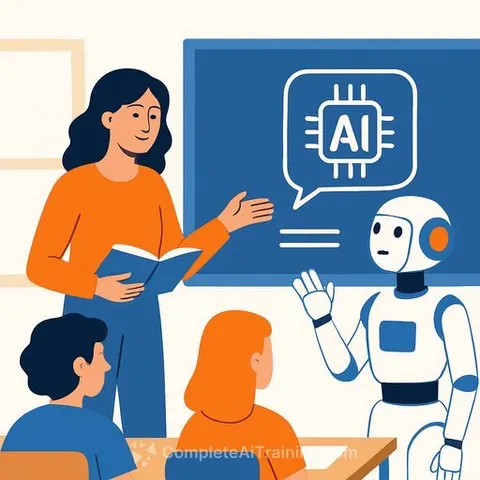
82% of Teachers Get No Formal Guidance on Using AI in Schools
A majority of public school teachers are navigating AI adoption without formal policies or training from their schools, according to a Gallup and Walton Family Foundation survey released this month. The study found that 82% of teachers receive no formal guidance on using AI in the classroom.
Gallup surveyed more than 2,000 K-12 teachers in American public schools between February 9 and March 2. The findings reveal a significant gap between the speed of AI adoption and school policy development.
Where Guidance Falls Short
Teachers lack direction across multiple uses of AI. Nearly 7 in 10 teachers (69%) receive no guidance on deploying AI for one-on-one instruction or tutoring. Almost 6 in 10 (58%) get no advice on using AI for grading and feedback. And 47% have no guidance on using AI to create assignments and class materials.
Teachers at lower-income schools face steeper guidance gaps. Only 49% of teachers at lower-income schools receive advice on using AI to create worksheets and assignments, compared to 59% at wealthier schools.
Schools that do have AI policies see higher adoption rates among both teachers and students, the survey found. Yet only 25% of teachers report their schools have formal AI policies, while 74% of Gen Z students say their schools do. This suggests students receive informal guidance from individual teachers rather than coordinated school-wide policies.
The Broader Problem: Unclear Job Expectations
AI guidance is one piece of a larger challenge facing teachers. More than half of teachers (55%) say the expectations for excellent teaching at their school are unrealistic.
Unrealistic expectations correlate directly with burnout. More than three-quarters of teachers who reported unrealistic job expectations experience frequent burnout. Teachers with clear, realistic expectations are significantly more likely to stay in their roles.
The data shows stark differences in retention. Of teachers who say expectations are extremely realistic, 94% plan to continue teaching next year. That drops to 74% among teachers who say expectations are not realistic.
What Schools Can Control
Clear communication from school leadership improves teacher satisfaction, engagement, and retention while reducing burnout. The survey suggests this is a low-cost intervention schools can implement immediately.
Andrea Malek Ash, a senior researcher on the study, said clear communication "doesn't cost money" but the benefits for teacher well-being can be "enormous."
Teachers today handle what amounts to "one-and-a-half jobs," Malek Ash said. When job expectations remain unclear and unrealistic, strain increases. Schools that communicate transparently about what excellence looks like-and provide tools like AI guidance-see measurable improvements in teacher retention and satisfaction.
For educators looking to develop AI skills, AI for Teachers Courses can provide structured training independent of school-level policies. Schools seeking broader resources can explore AI for Education options.