
AI news ·
Multi-agent AI systems set to shift supply chains from reactive to self-orchestrating networks, says Allcargo Global CIO
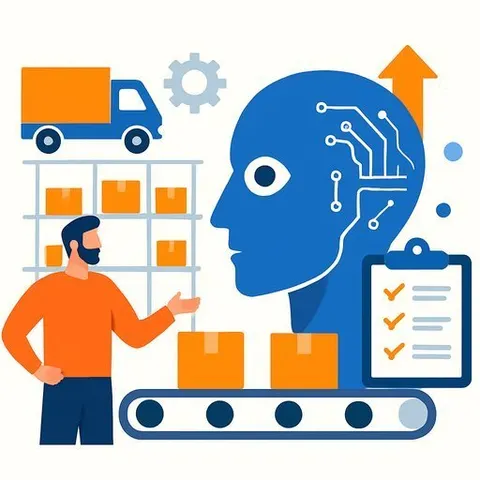
Multi-agent AI systems will shift supply chains from reactive to self-orchestrating networks within two to three years. CIO Rajneesh Garg now ties every AI project to a percentage return on investment target, measuring success by revenue growth and operational resilience.
Rajneesh Garg, CIO of Allcargo Global Limited, said the most influential technology leaders are now measured by business outcomes rather than the systems they deploy. His perspective comes as multi-agent AI systems begin shifting global supply chains from reactive operations to self-orchestrating networks that predict disruptions and act with minimal human intervention.
"Technology earns credibility, but business impact earns leadership," Garg said. The evolution demands that CIOs move from an IT-execution mindset to becoming strategic drivers of growth, with success metrics tied directly to revenue, customer experience, and competitive differentiation.
The shift from generative AI to autonomous execution
Garg described a fundamental transition underway in supply chain technology. "We are moving from AI that creates/comprehends content to AI that executes decisions," he said. Over the next two to three years, multi-agent AI systems will independently coordinate inventory, freight capacity, customs clearance, and disruption management across supply chain ecosystems.
The most significant change will be the move from reactive operations to self-orchestrating trading networks. These systems will predict issues, recommend actions, and execute them while humans maintain oversight. Garg quoted industry leaders who view AI as "a workflow transformation platform, not merely a productivity tool."
Redefining the CIO scorecard
Garg has overhauled how his IT organization measures success. Traditional backend cost-savings metrics have given way to direct commercial outcomes: reduced customer onboarding time, improved shipment visibility, lower exception handling cycles, and faster quote-to-cash processes.
"Technology is no longer a support function; it is a growth enabler," he said. His team introduced a new KPI centered on percentage return on investment, set as a target for executing every AI project. The ultimate measure, he said, is how effectively IT contributes to revenue growth and operational resilience.
For CIOs looking to build similar strategic credibility, structured learning paths like the AI Learning Path for CIOs can provide frameworks for connecting technology initiatives to business value.
Centralized intelligence, localized innovation
Garg advocates for a model of centralized intelligence with decentralized innovation. Core AI platforms, governance, security, and data science capabilities are managed centrally through Allcargo's IT Shared Services. Regional and operational teams then identify local use cases and tailor solutions to specific regulations, trade lanes, and customer requirements.
"Standardizing the platform, localizing the solution - global consistency with local agility," he said. Continuous operational feedback ensures that AI addresses real cargo consolidation challenges rather than theoretical ones. This approach applies across different modes of operations, including road logistics, terminals, ports, and NVOCC needs.
Modernizing without building technical debt
On the technical front, Garg's team is modernizing legacy application stacks incrementally rather than pursuing wholesale replacement. They are adopting API-first architectures, modular platforms, and governed data layers so AI can integrate across applications through cloud-native integration.
"AI should remain loosely coupled rather than embedded deeply inside legacy systems," he said. This minimizes technical debt and allows adoption of future AI innovations without expensive re-engineering. The goal is to create an AI-ready digital foundation that won't require unraveling when the next generation of tools arrives.
Why this matters for executives and strategy leaders
Garg's advice for technology leaders is direct: avoid automating defective processes. "AI will simply make inefficiency swifter and at greater scale," he said. His three non-negotiable mantras are business value over technology-first thinking, trust and governance with change management before scaling, and enterprise-wide vision executed incrementally with executive buy-in.
For rising professionals, his counsel centers on curiosity and business acumen. "Move from technology expertise to business strategy. Understand a customer's expectations, revenue streams, operational challenges, and industry economics." The CIOs who earn leadership roles are defined by the outcomes they deliver - not the systems they deploy. Professionals pursuing this transition can explore resources in the AI for Executives & Strategy category to build the business-first mindset Garg describes.