
AI news ·
Musk takes Altman to court, Google expands Pentagon AI deal, and Meta faces pressure from China and EU regulators
Elon Musk's $134B lawsuit against Sam Altman went to trial this week over OpenAI's shift from nonprofit to commercial model. Google also granted the Pentagon unrestricted AI access, drawing internal protests.
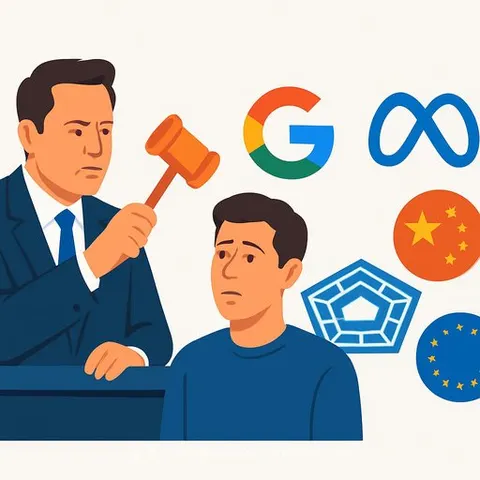
Weekly tech briefing: Musk sues Altman, Google deepens Pentagon ties, Meta faces global pressure
Elon Musk and Sam Altman went to trial this week over OpenAI's direction. Musk is seeking $134 billion in damages, alleging Altman abandoned the company's nonprofit mission in favor of a commercial model aligned with Microsoft. Altman denies the claims, saying Musk left due to internal disagreements and is now motivated by competitive rivalry.
The case arrives as OpenAI prepares for a major IPO, making it a landmark test of how courts will handle disputes over AI company governance and shareholder obligations.
Google grants Pentagon unrestricted AI access
Google has given the U.S. Department of Defense access to its AI models under a classified agreement. The Pentagon can deploy the technology for any lawful government purpose, according to reporting on the deal.
The arrangement follows Anthropic's refusal to provide the same level of access. Hundreds of Google employees have protested internally, citing concerns about mass surveillance and sensitive military applications.
The move signals a shift in how AI is embedded in national security strategy, raising questions about ethical use and regulatory oversight at the government level.
China orders Meta to reverse $2 billion acquisition
Chinese regulators ordered Meta to unwind its completed acquisition of AI startup Manus, which relocated to Singapore after the deal closed. Beijing cited national security concerns, arguing the transaction could expose Chinese AI technology and talent to foreign access.
For technology leaders, the decision underscores escalating geopolitical risk in AI supply chains. China has grown more aggressive in controlling technology flows across its borders.
EU finds Meta lacks protections for minors
The European Commission ruled that Meta violates the Digital Services Act by failing to protect users under 13 from accessing Facebook and Instagram. The finding concludes a nearly two-year investigation into Meta's age verification systems.
Violations of the DSA can result in fines up to 6% of annual global revenue. Meta has not yet responded to the ruling.
Executive moves
TSS named David Hull as chief technology officer on April 27. Hull spent nearly 30 years at Dell Technologies, most recently as senior director and CTO of technology strategy.
BDO USA appointed Jim Maza as chief information officer. Maza previously held CIO roles at Marsh McLennan Agency and Opportunity International.
IPO activity
The IPO market remained active in the week ending April 30. Most blank check companies and special purpose acquisition vehicles priced at $10 per share, with a few exceptions:
- Pershing Square Inc. (asset management) opened April 29 at $50 per share
- Silver Bow Mining Corp. (minerals exploration) expected April 30 at $11.50 per share
- RRE Ventures Acquisition Corp. (SPAC) expected April 30 at $11.50 per share
- Avalyn Pharma Inc. (clinical-stage biotech) expected April 30 at $16-18 per share
Several blank check companies focused on aerospace, defense, and AI-enabled blockchain technology also launched, signaling continued investor interest in those sectors.
For executives and strategy leaders: Stay current on AI developments shaping corporate strategy, and consider how geopolitical tensions and regulatory shifts affect your organization's AI roadmap.