
AI news ·
Nebraska Supreme Court suspends Omaha attorney who used AI to write legal brief and lied about it
Nebraska suspended Omaha attorney Greg Lake after he submitted a brief where 57 of 63 citations contained errors. He denied using AI in court, then admitted it two days later in a sworn affidavit.
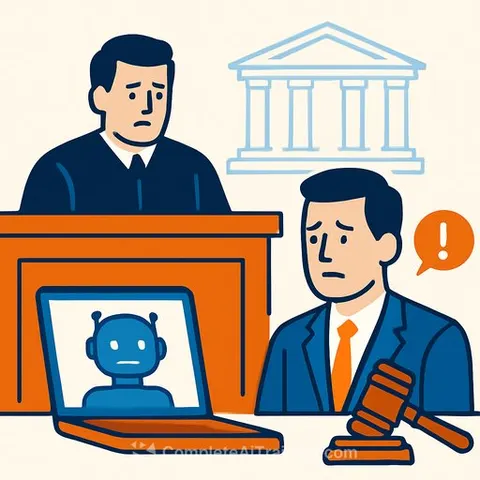
Nebraska Suspends Attorney Over AI-Written Legal Brief With Fabricated Citations
The Nebraska Supreme Court suspended Omaha attorney Greg Lake from practicing law after he submitted a legal brief riddled with errors, including fictitious case citations and misquotes. Lake initially denied using artificial intelligence to write the document, then admitted to the AI use in a later filing.
Lake argued an appeal in a divorce case before the state's highest court in February. The justices immediately questioned the brief's quality, noting 57 of 63 references contained errors.
During oral arguments, a justice asked directly: "The elephant in the room is whether or not you used artificial intelligence. Did you?"
Lake said no. He blamed a broken computer and claimed he had uploaded the wrong version of the brief while traveling to his 10th wedding anniversary celebration.
Attorney Reverses Course
Two days ago, Lake submitted an affidavit to the Supreme Court opposing a temporary suspension. For the first time, he admitted to using AI to draft the brief and called it a "grave error of judgment" for not being forthright with the court.
The suspension is temporary. A court-appointed referee will conduct a full investigation and disciplinary hearing to determine the length of the suspension.
What This Means for Legal Professionals
The case underscores the risks of using AI tools without verification. Generative AI systems frequently produce plausible-sounding but false citations - a problem known as "hallucination." Attorneys remain responsible for every statement filed with the court.
For legal professionals working with AI, training on proper use and verification protocols is essential. Resources like AI for Legal and the AI Learning Path for Paralegals cover document review, research automation, and compliance standards that help prevent similar errors.