
AI news ·
New Creative Commons framework gives creators control over AI use of their work
Creative Commons has proposed CC Signals, a voluntary framework letting creators attach machine-readable rules to their content specifying how AI companies can use it. It covers scraping, training, and compensation terms.
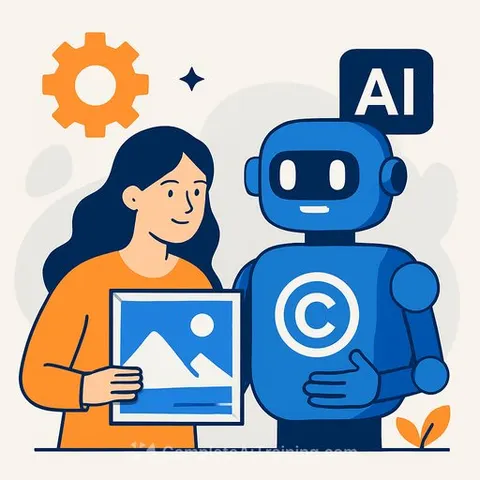
New Framework Lets Creators Control How AI Uses Their Work
Creative Commons has proposed CC Signals, a voluntary framework that lets creators specify whether and how AI companies can use their content. The system attaches machine-readable instructions to online material, allowing creators to set conditions around scraping, training, and other automated uses.
The proposal addresses a growing tension. AI companies routinely scrape news articles, academic papers, and social media posts to train their models-often without compensation or permission. Many creators are now blocking scrapers or posting less frequently, fragmenting what was once an open web.
How CC Signals Would Work
A news outlet or creator would attach standardized instructions to their content. These instructions tell machines what uses are allowed and under what conditions. Both humans and machines can read the signals.
The framework rests on three principles: consent (creators decide), compensation (creators can require payment or credit), and credit (sources are acknowledged).
This mirrors robots.txt, a simple file that has guided web scraping for decades. Robots.txt was never legally binding, but it became standard practice because it provided clear, mutually understood rules between content hosts and developers.
Why This Matters for Creators
CC Signals give creators more control than they have now. Without it, creators face a binary choice: allow all scraping or block it entirely.
The framework could also benefit smaller creators who lack bargaining power with major tech companies. A musician, photographer, or writer could specify that their work requires credit, compensation, or visibility-without negotiating directly with OpenAI or similar firms.
There's a secondary benefit: AI trained on higher-quality, consented data tends to perform better and exhibit fewer biases. Restricted access to premium content could push AI developers toward better data practices.
The Practical Problems
The biggest challenge is enforcement and payment calculation. If thousands of creators attach different compensation requirements to their work, how do you calculate what an AI company owes? How do you distribute those payments?
This problem already plagues collective licensing schemes for music and other creative work. Scaling it to millions of internet works accessed globally is a logistical problem without an obvious solution.
Creative Commons says it will publish best-practice guides for implementing CC Signals, but that work is still underway. Without clear guidance, adoption could be slow and inconsistent.
What Comes Next
CC Signals isn't a legal tool. Creative Commons frames it as defining "manners for machines"-establishing norms around respect and recognition rather than relying on copyright law.
The Australian government has already ruled out creating a new copyright exception for AI training, signaling support for creator protections but leaving uncertainty about how creators can manage their content legally at scale.
CC Signals is imperfect. But it offers a starting point for balancing creator rights against AI development, without requiring new legislation or international agreements.
For creatives, understanding these frameworks matters. As AI tools become standard in most industries, knowing how your work gets used-and what protections exist-is no longer optional.
Learn more about AI for Creatives and AI for Legal considerations affecting your work.