
AI news ·
New Fed AI task force members share Chairman Kevin Warsh's views on the economic potential of artificial intelligence
Fed Chair Warsh named three advisors to an AI task force evaluating the technology's impact. They will assess if AI can drive 5% growth despite internal inflation worries.
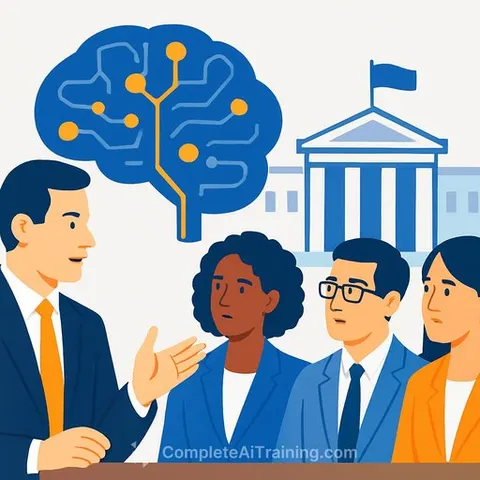
Federal Reserve Chairman Kevin Warsh on Thursday named three external advisors to lead a new task force on artificial intelligence, a group that will shape how the central bank judges the technology's impact on growth and inflation. All three members - venture capitalist Marc Andreessen, economist Charles I. Jones, and Xbox CEO Asha Sharma - have expressed sharply positive views about AI's economic potential, aligning with Warsh's own long-standing optimism.
The AI task force is one of five Warsh unveiled Thursday. Its formal charge is to "assess the economic impact of new general-purpose technologies, including artificial intelligence, to inform the Federal Reserve's policy judgments." Warsh selected the members personally, and all have recently spoken or written in bullish terms about what AI can do for the economy.
Who is advising the Fed on AI
Andreessen, co-founder of the venture capital firm Andreessen Horowitz, has become one of AI's most vocal evangelists. "We've turned sand into thought," he told podcaster Joe Rogan in May, referring to the silicon chips that power AI systems. Jones, a Stanford economist on leave to join the Anthropic Institute, wrote in a recent paper that AI could push U.S. economic growth per capita to "exceeding 5 percent per year" if it automates nearly all the weak links in the economy. Sharma, who became CEO of Microsoft's Xbox division in February, said in a Bloomberg interview, "Now, do I believe in AI? Absolutely," even though she chose not to put AI front and center in the Xbox experience because console players aren't excited about it.
Warsh has long bet on AI's economic power
The Fed chairman has been a prominent advocate for AI's potential to reshape the economy. At his first press conference in June, Warsh called AI adoption "perhaps as important a change in the economy and business and households that we've had in my adult lifetime." In 2025, he said advancements in AI would be a reason for the Fed to cut interest rates, because faster growth without inflation would give the central bank room to ease policy.
The Fed's internal skeptics
Warsh's enthusiasm faces pushback inside the institution he leads. Minutes from the Federal Open Market Committee's June meeting, released this week, show that while some participants saw the potential for a productivity boost from AI, they also noted "considerable uncertainty" about the timing and size of any gains. Those gains, the minutes said, were "expected to lag the ongoing boost of AI adoption on demand."
New York Fed President John Williams on Thursday flagged a more immediate concern: rising prices for electricity and semiconductors tied to the AI boom. Williams said prices have risen like a "hockey stick," with some components doubling and tripling. He described AI as a "demand shock" and questioned whether supply could keep up, a condition necessary to contain inflation.
Why this matters for government and finance professionals
The AI task force's work could feed directly into the Fed's interest rate decisions, making it a policy lever that government and finance professionals should track closely. The group is expected to finish its work by year-end, but the Fed's next meeting at the end of July - where rates are expected to hold steady - may offer early signals on how the internal debate is evolving. For those working in AI for Government or AI for Finance, the tension between Warsh's optimism and the committee's caution highlights the importance of separating AI's long-term potential from its near-term inflationary pressures. The outcome will influence everything from regulatory posture to investment flows in sectors sensitive to interest rates.