
AI news ·
New York parents and educators flood school board meeting with AI concerns despite proposal withdrawal
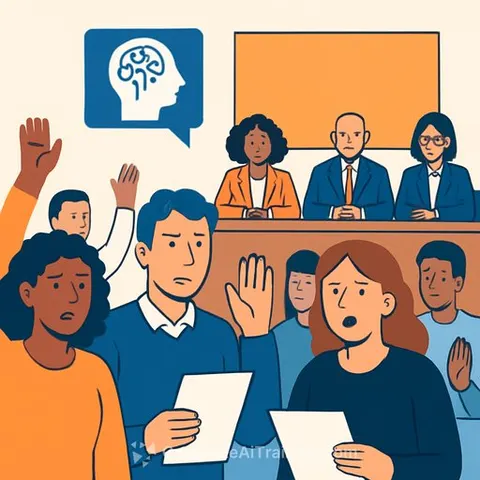
Over 100 New Yorkers testified at a NYC school board meeting this week, demanding clearer rules on AI in classrooms. The city has no policy on student AI use for homework and its full guidelines aren't due until June.
New York City Schools Face Pressure Over AI Deployment Without Clear Rules
More than 100 New Yorkers testified at a New York City school board meeting this week about artificial intelligence in classrooms, even after the Education Department withdrew a controversial proposal for an AI-focused high school.
Parents, students, and educators argued that the city is rolling out AI tools without transparency, clear rules, or adequate safeguards. They cited surveillance technology already in use at 150 schools, including digital bathroom hall passes, and questioned how the department spends money on AI without explaining which devices and applications students use.
One Park Slope parent spoke for many in the room: "The city is telling us that AI is inevitable, but won't tell me what devices and applications my children are using."
Educators Question Whether AI Conflicts With Learning
A student panel member at the meeting said many peers worry that AI sends the wrong message to students. "Many feel AI is teaching a dangerous message that results matter more than the learning process," said Julia Nasef of Tottenville High School. "Some of the most important learning happens when students struggle, make mistakes, ask questions, and improve over time."
Nasef acknowledged that students see value in AI for specific subjects like math and science when used intentionally. She urged the panel to adopt "clear, student-centered guidelines for AI implementation."
The city's preliminary AI framework, released in March, does not address whether students can use AI for homework or differentiate guidelines by grade level.
Panel Approves Tech Contracts Despite AI Concerns
The Panel for Educational Policy voted to approve a $500,000 contract with Kaplan, a company that recently added AI features to its test prep products. Speakers at the meeting raised concerns about Kaplan's privacy breach affecting 1.4 million people across seven states. The panel voted down only one of three educational technology contracts on the agenda.
Naveed Hasan, a panel member who previously supported the AI-focused high school proposal, announced he now backs a two-year moratorium on AI in schools. He said the city needs more time to address data privacy and learning concerns.
School Leadership Acknowledges Knowledge Gap
Panel Chair Greg Faulkner admitted Wednesday that he has limited understanding of AI and wants more thorough community engagement on future proposals. He said Chancellor Kamar Samuel's decision to withdraw the AI high school proposal shows the department is listening to local concerns.
Faulkner said he is considering proposing changes to how the Education Department develops AI policies. He wants the panel to work more closely with the department's AI policy authors and receive briefings on AI research.
The Education Department said its initial AI guidance came from its Academics and Instruction team, with input from stakeholders and internal committees. The full AI policy is expected in June, and the department is accepting community feedback through May 8.
For educators seeking to understand AI tools in educational settings, resources on AI for Teachers and AI for Education offer practical guidance on implementation and classroom use.