
AI news ·
New Zealand publishes voluntary AI framework for public sector with no binding enforcement
New Zealand's public sector AI framework is voluntary, with no legal enforcement. Agencies can adopt or ignore it, creating uneven compliance standards across government.
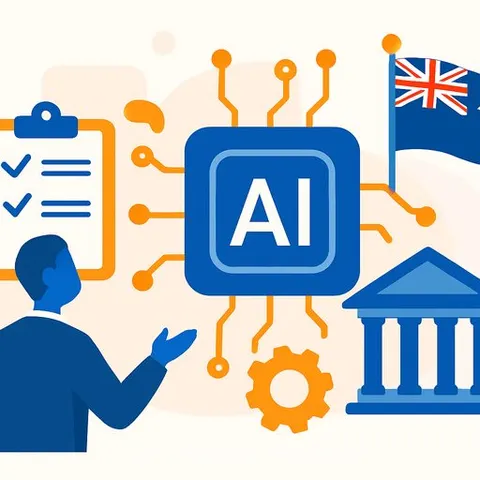
New Zealand's voluntary AI framework leaves enforcement gaps for government agencies
New Zealand has published a voluntary framework for artificial intelligence use in the public sector that names transparency, fairness, and human oversight as core principles-but carries no legal force. The approach leaves agencies free to adopt or ignore the guidance, creating inconsistent compliance standards across government.
Academics at the University of Canterbury and Te Herenga Waka, Victoria University of Wellington, characterize the framework as overly optimistic. They note the divergence across jurisdictions: some governments are building surveillance-heavy systems, while others have enacted binding rules to protect consent and civic rights.
What this means for procurement and compliance
For people managing government AI projects, the voluntary nature creates operational friction. Non-binding guidance typically produces uneven results: some agencies develop rigorous controls, others do minimal work, and few follow identical standards.
Binding requirements tend to generate standardized algorithmic impact assessments, independent audits, and stronger vendor contracts. Voluntary frameworks often leave gaps in documentation, monitoring, and post-deployment evaluation-increasing technical debt for teams integrating third-party models into government services.
Without legal mandates, agencies may struggle to enforce consistent logging, traceability, and auditability across systems. This inconsistency raises risk for procurement teams evaluating vendors and for operations staff managing models in production.
What to track
Watch for signals that indicate whether the voluntary approach will actually work:
- Whether the framework is later codified into statute or regulation
- Publication of agency-level algorithmic impact assessments
- Procurement templates that mandate model documentation and traceability
- Creation of independent audit bodies
- Government guidance on data sharing and surveillance safeguards
These indicators will show whether voluntary adoption leads to consistent implementation or persistent governance gaps across the public sector.
For government teams building or procuring AI systems, understanding your jurisdiction's enforcement mechanisms matters. AI for Government resources can help clarify how different governance approaches affect your compliance workflows. The AI Learning Path for Policy Makers addresses governance frameworks and policy analysis directly.