Flexible hiring and AI training: a 2026 playbook HR can use now
China is doubling down on employment in 2026 after creating 12.67 million new urban jobs in 2025 and holding unemployment at 5.2 percent. The push blends flexible hiring with practical upskilling-think evening job fairs and hands-on AI training-to keep talent competitive without pulling people off the clock.
For HR leaders, the message is simple: meet candidates where they are, teach skills that pay, and build early-warning systems for tech shocks before they hit your org.
What's happening on the ground
- Nighttime hiring: Jiangsu province rolled out regular evening job fairs, with 380 events scheduled through February. The goal: let employed candidates explore offers without missing shifts or using PTO.
- Nighttime upskilling: Workers can pick up in-demand skills-short-video production, pastry making, and AI training-after hours, so learning doesn't collide with work.
- Digital literacy front and center: As one postgraduate in Beijing put it, "I registered for an online AI course to learn how to use and train AI to stay competitive." That sentiment is spreading fast.
- Policy direction: The labor ministry emphasized full employment, stronger employer support, and better unemployment monitoring. It also flagged the need for early warning and response mechanisms for AI's impact on jobs.
- Incentives and focus areas: Tax cuts and subsidies for labor-intensive employers, plus a big push into the digital and green economies. There's also attention on county-level growth, rural revitalization, college grads, and migrant workers.
How HR can apply this-immediately
- Run after-hours hiring sprints: Pilot weekday evening or weekend pop-up fairs. Offer on-site skills screens and same-day offers for priority roles. Track time-to-accept by time slot.
- Make learning shift-friendly: Offer micro-courses by role and level. Stipend completion, not seat time. Rotate instructors so frontline teams can join without losing coverage.
- Stand up AI literacy tracks: Teach safe, practical AI use for HR, ops, and customer teams: prompt basics, office automation, data hygiene. If you need ready-made paths by job family, see AI Learning Path for Primary School Teachers.
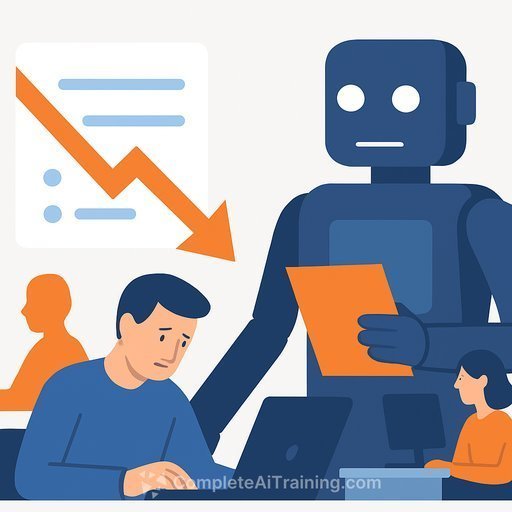
- Build an AI impact early-warning dashboard: Monitor automation risk by role, internal mobility options, and skill gaps. Tie signals to playbooks: retrain, redeploy, or redesign work.
- Leverage incentives: Map tax credits and wage subsidies for your sector and region. Prioritize high-volume, labor-intensive roles where incentives stretch furthest.
- Broaden your footprint: Treat county-level and rural hiring as core, not side bets. Use mobile assessments, local training partners, and remote-first workflows to expand reach.
- Target key groups with precision: Build separate funnels for college grads and migrant workers. Pair apprenticeships with guaranteed rotations and mentors to reduce early attrition.
Metrics that matter
- Hiring: Show rate and offer rate by time of day; time-to-hire; quality-of-hire at 90 days.
- Learning: Course starts, completions, skills verified, and impact on performance or promotion.
- Mobility: Internal fill rate for at-risk roles and average time to redeploy.
- AI adoption: Percentage of roles with defined AI use cases and documented guardrails.
- Diversity and reach: Talent mix across geographies; rural vs. urban conversion rates.
- Early warning: Vacancy trends by role tier, voluntary churn, and task-level automation signals.
Policy supports-like tax cuts, subsidies, and targeted services-make this easier to scale. But you don't need to wait for perfect policy to start. Start small, audit the outcomes, and double down where the data says it works.
Quick resources
- Ministry of Human Resources and Social Security (for policy updates, employment services, and programs)
- Latest AI courses (build role-specific AI paths for your workforce)
The takeaway: flexible access to jobs plus practical AI skills is a force multiplier. Put hiring where candidates can actually show up, teach skills people can use this week, and keep a close eye on how AI shifts your org's work. That's how you protect headcount and lift performance at the same time.
Your membership also unlocks: