
AI news ·
Oregon Supreme Court dismisses case over fake AI-generated legal citations
Oregon's Supreme Court dismissed parts of two cases after lawyers and self-represented parties submitted AI-generated fake legal citations. Researchers estimate over 1,000 U.S. court cases contain similar AI-sourced errors.
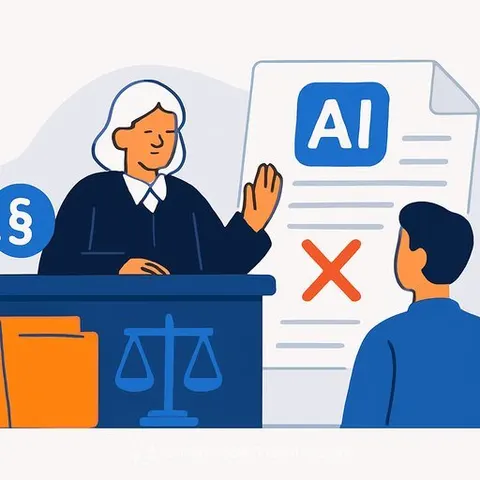
Oregon Supreme Court Dismisses Cases Over AI-Generated Fake Legal Citations
Oregon's highest court struck down portions of two cases Friday after lawyers and self-represented parties submitted documents containing fabricated legal citations created by artificial intelligence. This marks the first time the Oregon Supreme Court has directly addressed false information produced by AI tools.
The court dismissed a petition for a writ of mandamus in one case after plaintiffs used ChatGPT and other AI tools to cite cases that do not exist. When asked to resubmit corrected paperwork, the plaintiffs filed documents containing citations to at least four nonexistent cases within 12 hours.
In the second case, the court fined a respondent $500 for submitting a document with unverifiable legal arguments and allowed them to resubmit corrected work.
Chief Justice Meagan A. Flynn said the rulings address a growing problem. "When the court has to spend considerable time and effort addressing fabricated legal arguments, it comes at the expense of other cases," Flynn said in a statement.
A Widespread Problem Across U.S. Courts
Researchers estimate more than 1,000 cases nationwide contain inaccuracies traceable to AI tools. The issue affects both licensed attorneys and individuals representing themselves.
In a notable federal case last summer, lawyers for MyPillow's chief executive were each fined $3,000 for submitting filings with dozens of errors generated by AI. An Oregon lawyer faced a steeper penalty-$110,000 in district court, the highest sanction to date for AI-related legal fabrications.
Ankur Doshi, General Counsel of the Oregon State Bar, told public radio in April that the problem creates cascading costs. Verifying whether citations exist requires court staff to investigate each one, adding time and resources. Opposing counsel must also spend time checking false citations, which increases legal fees for the other side.
"That's one of the primary factors that's extremely aggravating about this," Doshi said. "It creates additional work for the court to have to go back and check it. But in addition to that, it creates additional work for opposing counsel."
Who's Using AI This Way
The problem spans both legal professionals and people without lawyers. Many users don't realize the AI tool is generating false cases and quotes-the systems produce fabricated citations with confidence and without warning.
Doshi said the issue affects lawyers as well as self-represented parties, making it difficult to prevent through any single intervention point.
For legal professionals working with AI for Legal research and document preparation, the Oregon cases underscore a basic requirement: verify every citation against primary sources before filing anything with a court.