
AI news ·
OSU researchers build AI tool that helps facility technicians identify building components from photos
Oklahoma State researchers built EyeFM, an AI tool that identifies building components from photos and delivers on-site maintenance guidance. It targets a common problem: technicians can't always access equipment records or manuals in the field.
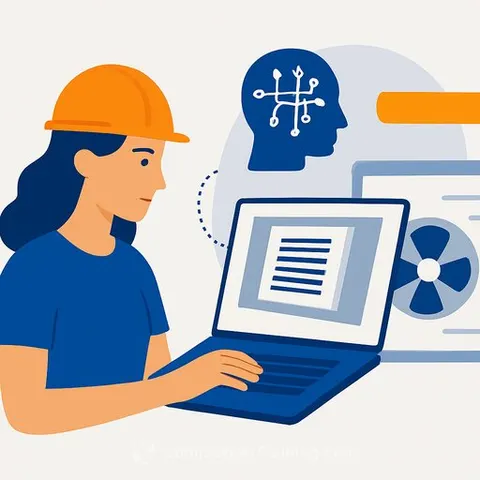
Oklahoma State researchers develop tool to identify building components from photos
Facility managers lose time searching for equipment information when building systems fail. Researchers at Oklahoma State University's College of Engineering, Architecture and Technology have built EyeFM, an AI tool that identifies building components from photographs and provides maintenance guidance on site.
Dr. Ashish Kumar Pampana and Dr. Soojin Yoon designed the system to address a persistent problem: maintenance staff often lack access to equipment records, manuals, or component identification while working in the field. In aging buildings with modified systems and incomplete documentation, identifying a single piece of equipment can consume critical time.
"Many building components look similar, especially in mechanical spaces where equipment can be old, modified, unlabeled, or installed in complex configurations," Pampana said. "In many cases, technicians may not have immediate access to detailed records while they are on site."
How EyeFM works
The tool uses a reverse image search engine trained on facility equipment images, particularly HVAC systems. It relies on EfficientNet-B7, a deep learning model fine-tuned with labeled facility component data, making it more accurate for building environments than general-purpose image recognition.
Rather than stopping at identification, EyeFM connects results to maintenance support organized into three categories:
- Functionality: Explains why a component matters and how its failure affects connected systems
- Maintenance repair and replacement: Provides technical references, specifications, manuals, and procurement guidance
- Communication: Offers field-ready tutorials, videos, and AI-driven troubleshooting
The system answers the question maintenance professionals ask: "What does this mean, and what should I do next?"
From research to practice
The project evolved through the U.S. National Science Foundation Innovation Corps program, where the team conducted customer discovery with facility professionals. That feedback shifted the focus from simple component recognition to broader maintenance intelligence.
OSU Facilities Management participated throughout development, grounding the research in real operational conditions. That collaboration shaped both the technical direction and practical value.
The research team plans to expand component coverage and integrate EyeFM deeper into facility workflows. Future applications include training, knowledge transfer, and digital operations across building portfolios.
"What excites us most is turning research into something people can actually use," Pampana said. "If we can help maintenance professionals do their jobs more safely, confidently and efficiently, that impact extends far beyond the technology itself."
For facility managers overseeing aging infrastructure or managing multiple buildings, tools that reduce response time to equipment failures directly affect operational resilience and safety. EyeFM demonstrates how academic research can translate into practical support for the professionals responsible for maintaining critical building systems.