
AI news ·
Edge AI deployments push companies toward hardware-rooted security and centralized management tools
AI workloads at branch offices and factory floors cut latency but expose hardware to physical risks and tougher compliance demands. New edge servers and centralized management tools aim to close those gaps.
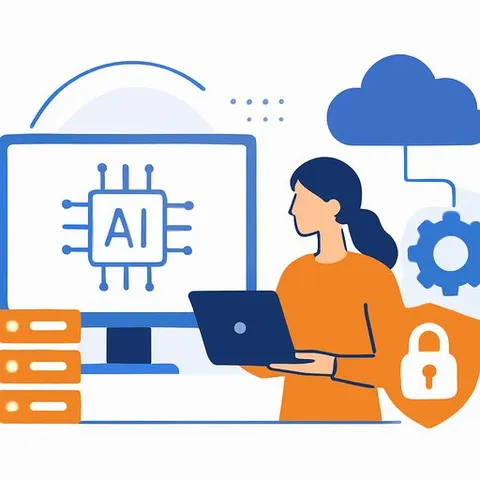
Edge AI Deployments Demand New Security and Management Approaches
Companies are increasingly running AI applications at the edge-in branch offices, retail sites, and industrial facilities-because some workloads cannot tolerate the latency of sending data to distant hyperscale regions. This shift changes what infrastructure teams must manage and secure.
The move to edge processing reduces data movement and strengthens privacy compliance, but it creates new problems. Physical access to edge hardware is harder to control, environmental conditions are less predictable, and managing distributed systems across multiple sites requires different tools than cloud-native deployments.
Regulatory Pressure Adds Auditing Requirements
The EU AI Act is raising the bar for companies running high-risk AI workloads. These deployments now require auditable inferencing-the ability to trace and document how an AI model made a decision-which affects both software design and hardware selection.
Hardware-Based Security Becomes Practical
HPE has built security into its edge servers at the hardware level. The company embeds a silicon root of trust in the iLO management chip and designs custom baseboard management controllers to verify system integrity from boot.
The HPE ProLiant DL145 Gen11 is designed for tight spaces: it's roughly half the depth of a standard DL365 server and operates at around 55 dB-quiet enough for retail or office environments. It supports NVIDIA RTX PRO 4500 Blackwell GPUs, tolerates wider temperature ranges, and includes built-in air filtration to handle dusty or humid sites.
Management Tools Reduce Operational Burden
Managing servers across dozens or hundreds of remote locations demands centralized visibility. HPE Compute Ops Management provides a cloud-native console for firmware deployment, health monitoring, and provisioning across distributed sites.
According to Forrester, organizations using such unified management tools spend up to 75 percent less time managing remote servers. For management teams overseeing edge deployments, that efficiency gain directly affects staffing and operational costs.
What Managers Should Monitor
- Regulatory enforcement of auditable inferencing requirements under the EU AI Act
- Uptake of hardware roots of trust and custom BMC designs for physical-site security
- Availability of workstation-class GPUs validated for quiet, rackable edge form factors
- Reported operational gains from unified management platforms
Edge AI shifts infrastructure priorities away from pure cloud scale toward reliability in distributed, resource-constrained environments. Teams pursuing edge deployments must reconcile latency, privacy compliance, ruggedness, and a larger physical attack surface-all at once. Hardware-rooted security and centralized management are becoming standard requirements rather than nice-to-haves.
For practical guidance on managing AI infrastructure decisions, see AI for Operations.