
AI news ·
Paraguay's Supreme Court approves AI framework for courts and judicial training
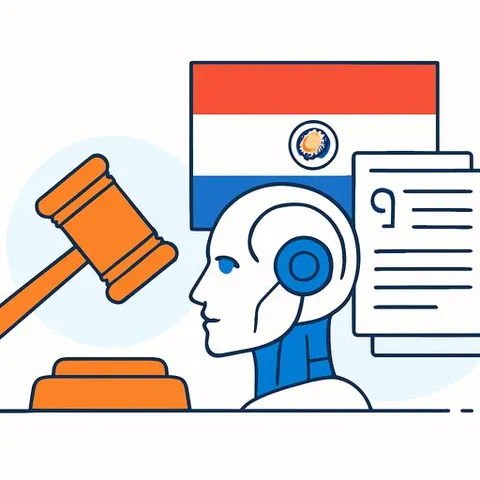
Paraguay's Supreme Court approved a resolution this week to bring AI into its judicial system, with human judges retaining final authority. Mandatory training for legal professionals must come before any deployment.
Paraguay's Courts Get AI Framework, But Training Becomes the Real Test
Paraguay's Supreme Court approved a resolution this week to integrate artificial intelligence into its judicial system, marking a significant shift in how the country's courts will handle data processing, information management, and case analysis. The framework, developed with support from UNESCO's Regional Office in Montevideo, establishes guardrails around AI use while placing judicial training at the center of implementation.
Resolution No. 12,677 requires courts to disclose when AI systems are used, particularly in cases affecting legal rights. The court said AI will function as a support tool only-human judges retain final decision-making authority.
The Job Displacement Question
The move raises familiar concerns about automation replacing workers, even in roles long considered safe from technology's reach. Major companies have laid off staff to fund AI investments, adding weight to those worries.
The Supreme Court addressed this directly. It said legal professionals need training to use AI effectively and understand both its benefits and risks. Without that preparation, the court argued, the technology cannot be applied responsibly.
Training as a Prerequisite
Paraguay's approach makes judicial training mandatory before courts deploy AI systems. Legal professionals will gain familiarity with generative AI and LLM technologies like ChatGPT and Claude, which the framework references as examples of tools now entering judicial workflows.
The training will also help courts translate international standards into local practice-a practical step that acknowledges AI adoption requires more than technical knowledge.
For legal professionals, this signals a shift: AI competency is becoming a baseline requirement, not an optional skill. AI for legal work is moving from theoretical to operational.
Public Transparency as a Control
The framework mandates disclosure whenever AI influences judicial processes. This requirement serves two purposes: it keeps the public informed about how decisions are made, and it creates accountability for how the technology is used.
Paraguay's strategy treats workforce preparation as the mechanism that makes AI adoption sustainable. Training comes first. Implementation follows. Without that sequence, the court implied, AI in courts becomes a risk rather than a tool.