Penn Engineers Solve Inverse Math Problem Using New AI Method
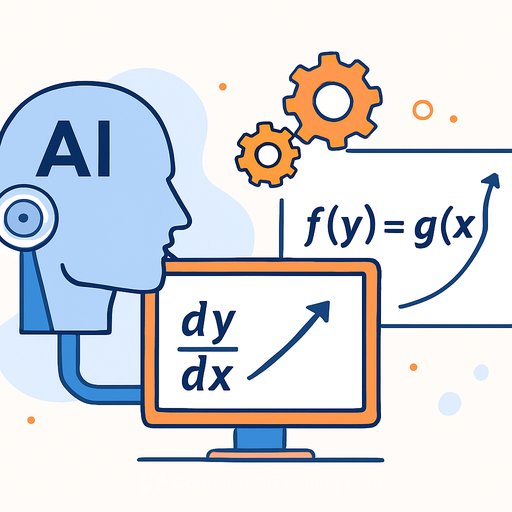
Researchers at the University of Pennsylvania have developed a way to help AI solve inverse partial differential equations-one of mathematics' hardest problems. The method, called "Mollifier Layers," smooths noisy data before analysis, reducing computational demands and improving accuracy.
The work addresses a fundamental challenge in science: working backward from observations to find hidden causes. Scientists can observe weather patterns, DNA structures, or heat flow, but inferring the underlying forces that create these patterns has remained difficult.
Why This Matters for Science
Differential equations form the foundation of scientific modeling. They describe how systems change over time-population growth, chemical reactions, heat transfer. Partial differential equations extend this further by capturing changes across both space and time.
Inverse PDEs flip the problem. Instead of predicting outcomes from known rules, scientists start with observed data and work backward to uncover the hidden forces driving those observations.
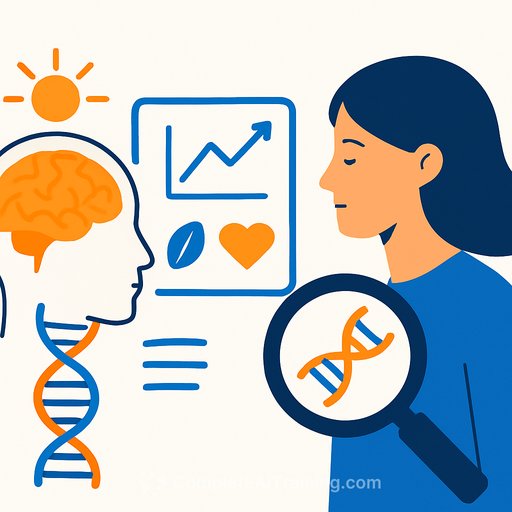
One application: understanding chromatin, the folded structure of DNA inside cells. These structures measure just 100 nanometers but determine which genes turn on or off-controlling cell identity, function, aging, and disease.
"We could see the structures and model their formation," one researcher said, "but we could not reliably infer the chemical processes driving this system."
The Problem With Current Methods
AI systems traditionally compute mathematical derivatives using recursive automatic differentiation. The process works by repeatedly calculating changes as data moves through a neural network.
With complex systems and noisy data, this approach becomes unstable and demands enormous computing resources. Each calculation amplifies imperfections, like repeatedly zooming in on a jagged line-the final result becomes less reliable.
A Solution From 1940s Mathematics
The Penn team adapted a concept introduced by mathematician Kurt Otto Friedrichs: "mollifiers," tools designed to smooth irregular or noisy functions.
Researchers created a mollifier layer within AI models that smooths input data before calculating changes. This avoids the instability caused by traditional methods.
The results were significant. The new method reduced noise and lowered computational cost without sacrificing accuracy.
Applications Beyond Biology
The potential uses extend across science. Materials research, fluid dynamics, and other fields involving complex equations and noisy data could benefit from this more stable and efficient framework.
For chromatin research specifically, the method could help scientists predict how gene-controlling processes evolve during aging, cancer, or development-potentially opening paths to new therapies.
"If you understand the rules that govern a system," researchers said, "you have the possibility of changing it."
For professionals working in research, understanding how AI approaches mathematical problems-and where traditional computing breaks down-matters increasingly. AI for Science & Research courses offer deeper context on these methods and their applications.
Your membership also unlocks: