
AI news ·
People lie more to AI than humans due to lower fear of social judgment, study finds
People lie, exaggerate claims, and exploit pricing errors more often with AI customer-service agents than with humans, a Journal of Business Research study found. Reduced fear of social judgment - not guilt - drives the behavior.
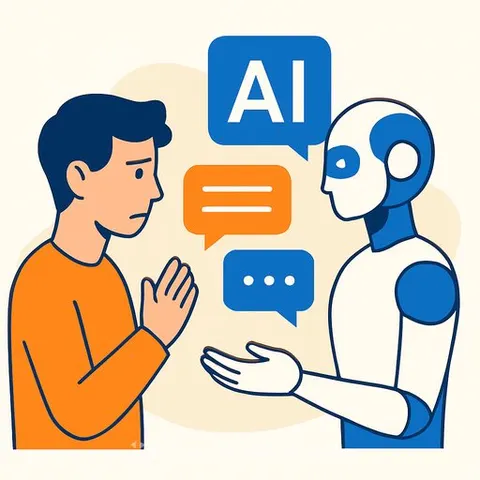
Consumers Lie More Often to AI Than to Humans, Research Shows
People are significantly more willing to lie, exploit pricing errors, and falsely claim discounts when interacting with AI systems than with human customer-service workers, according to a study published in the Journal of Business Research.
Researchers from Sun Yat-sen University found that consumers feel less social pressure when dealing with AI. They attributed this to reduced "anticipatory face loss"-the discomfort people experience when they expect embarrassment or social judgment.
The study tested this across multiple scenarios. In field experiments, participants exaggerated results more often for extra rewards when dealing with AI agents compared to humans.
Why the Difference Exists
Fear of social judgment-not guilt-drives most unethical behavior toward AI. Participants perceived AI systems as less socially aware and less capable of judging them, making dishonest behavior feel safer.
This matters for your work. As companies deploy AI for Customer Support, understanding this behavior shift is critical. By 2029, AI agents could autonomously resolve 80% of customer-service issues, according to Gartner research from March 2025.
What Makes AI Feel More Trustworthy
The research identified two factors that reduced dishonest behavior: when AI appeared more competent and when it used eye-gaze cues like simulated eye contact.
A separate October 2025 study on humanoid robots found similar patterns. Consumers responded more favorably to robots with moderate human features-facial expressions and eye movement-than to highly realistic ones, which often triggered discomfort.
When robots displayed human attributes, consumers showed greater trust, comfort, and willingness to spend time interacting with them.
The Implication for Support Teams
As AI Agents & Automation handle more customer interactions, these findings suggest that designing AI with visible social awareness-through eye contact, appropriate responses to deception, or competence signals-could reduce unethical consumer behavior and improve transaction integrity.