
AI news ·
People use AI for legal guidance but conversations lack attorney-client privilege
AI chats have zero attorney-client privilege and can be subpoenaed as evidence. Lawyers now routinely obtain these logs, even if users delete the messages.
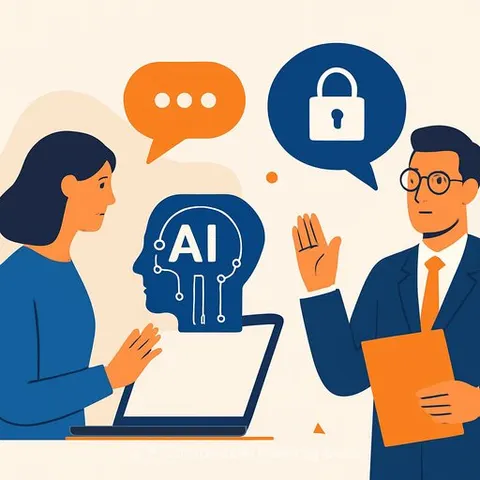
As more individuals involved in legal disputes seek quick answers from AI chatbots, one Huntsville attorney is sounding the alarm: those conversations are not private and can be obtained by opposing counsel as evidence. For lawyers and paralegals, the practice introduces new risks around client confidentiality and discoverable digital records.
No attorney-client privilege for AI chats
Huntsville attorney Mark McDaniel said he sees clients every week who bring in answers they pulled from ChatGPT. "They say, 'Oh, by the way, we saw this on AI, thought it might help,'" McDaniel said. The problem is that exchanges with a chatbot lack the protections that shield conversations with a lawyer. "If you're just out there searching for answers and you're putting incriminating issues out there on AI, we can get that," McDaniel said. "Now, even if you delete it, we can get it."
Prosecutors and civil attorneys have begun treating those logs as a rich new source of evidence. During a deposition, they can ask whether a party used AI, which services they used, and when. They can then subpoena the records. McDaniel said people have entered details into ChatGPT - about plans, thoughts, or past conduct - that have no privilege protection. "People talk in ChatGPT about their fantasies and things," he said. "What they like and what they've done with other people. You name it."
Mark Sachs, who works with Cyber Huntsville, compared AI chats to search engine history. "If you're using OpenAI, ChatGPT-or other things-then it is no different than a search engine," Sachs said. "It's considered to be a public resource." He noted that deleted conversations may remain on company servers for some time, leaving a trail that can still be acquired through legal process.
Accuracy and jurisdiction pitfalls
Beyond the privacy risk, McDaniel warned that AI-generated legal information is often inaccurate or based on laws from other states. Clients sometimes arrive with advice sourced from jurisdictions that do not apply in Alabama, which can mislead them about their actual legal standing.
A user's perspective: empowerment vs. risk
Andrea Vazquez relied on ChatGPT while handling her own case with a public defender. She said the tool became essential during discovery, when she had to gather evidence without immediate legal counsel. "ChatGPT is so important to me because it helps me guide me through when I don't have legal counsel during the discovery portion of my case," Vazquez said.
She acknowledged the warnings about data privacy but said the practical value outweighs those concerns. "I'm not privy on all of the fear-mongering regarding the AI," Vazquez said. "I understand what data centers are doing and the concern to the public and things like that. But I also know that it's pretty valuable for me as a citizen and an everyday person. I will continue to honestly use it regardless of what is a negative out there about it."
Why this matters for legal professionals
For attorneys, the central lesson is clear: client use of AI chatbots can create a new category of discoverable material with no privilege protection. Early questioning about AI use in depositions and targeted subpoenas are now standard tactics. Firms should proactively advise clients never to enter sensitive facts or legal theories into a public chatbot.
Paralegals and legal support staff also need to recognize that any AI-generated research or drafts exchanged with clients may become evidence. Professionals working in document review or case preparation can benefit from structured guidance on these risks, such as training resources on AI for Legal or a dedicated AI Learning Path for Paralegals that addresses proper use and the boundaries of attorney-client privilege in digital settings.