
AI news ·
Physical AI moves from factory floor hype to hardware scaling challenge
Robots are moving beyond scripted tasks, using computer vision and reinforcement learning to handle unpredictable work in real factories. But scaling physical AI breaks on hardware delays, supply chains, and legacy infrastructure-not algorithms.
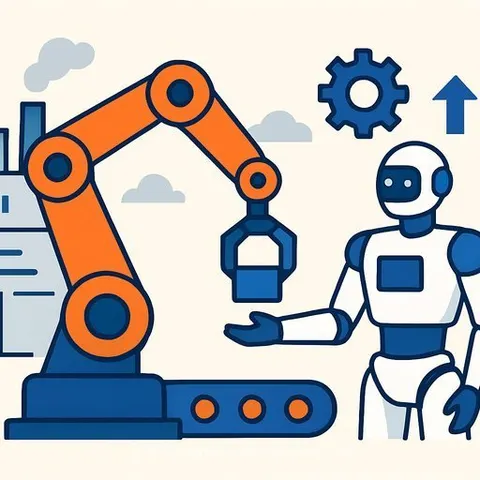
Physical AI moves beyond chatbots to reshape manufacturing
Robots are learning to work in unstructured environments without scripted tasks. Computer vision, reinforcement learning, and edge computing give machines spatial awareness that lets them perceive, adapt, and handle high-variability work-sorting scrap metal, navigating crowded spaces, or assembling delicate electronics alongside humans.
This shift changes how developers work. Instead of writing code for every scenario, engineers train robots in digital simulations, running millions of iterations before touching physical hardware. The feedback loop shrinks from months to hours.
The real traction is happening in three areas: mobile robots that interact with shelves and inventory, collaborative robots sensitive enough to adjust force and speed in real-time, and vision systems that catch defects invisible to human inspectors.
Where the scaling actually breaks
The companies building physical AI face a wall that digital software companies never hit. You cannot click a button to manufacture 10,000 robotic units.
Hardware agility is the first problem. CNC-machined joints, injection-molded housings, and specialized sensors take time. A three-month delay in a custom actuator can freeze an entire product roadmap. Supply chains for precision components remain volatile.
The second challenge is lifecycle resilience. A robot in a warehouse encounters dust, heat, vibration, and mishandling. Design for manufacturability and serviceability-DFM/DFS-often comes last for AI-first companies. It should come first.
The third barrier is integration. Legacy factories were not built for autonomous robots. Retrofitting requires charging infrastructure, 5G connectivity, and safety protocols that many startups underestimate.
What separates winners from the rest
One enterprise customer shifted production back to the U.S. to optimize material flow and logistics. The work included advanced manufacturing in composites and electromechanical assembly, plus high-precision robotics components. The result: lower operational risk, better cost predictability, faster time to market.
The pattern is clear. Companies that dominate will treat hardware with the same rigor as software. They will build robust manufacturing strategies, not just impressive demos.
Physical AI requires world-class algorithms. It also requires a transparent, agile supply chain and the systems integration skills to deploy robots at scale. Robotics is a multi-disciplinary sport.
For product development teams, this means understanding that the most sophisticated AI fails without manufacturing discipline. The bridge between software and the shop floor determines whether a prototype becomes a production line.