
AI news ·
Ports turn to AI to improve security and manage growing cargo operations
Ports are deploying AI-powered cameras, drones, and sensors to secure sprawling facilities handling record cargo volumes. The same connected systems create cyber vulnerabilities, as the Maersk ransomware attack made clear.
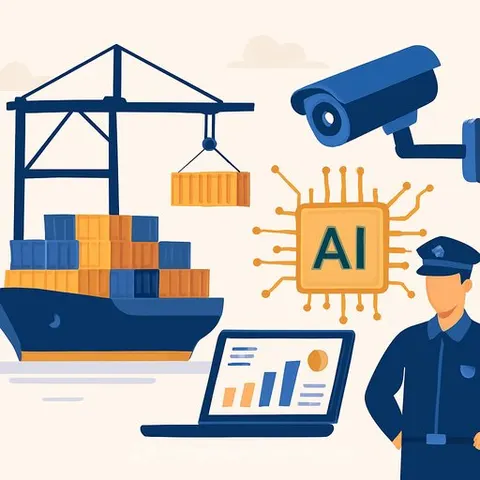
AI Takes Over Port Security as Container Ships Grow Larger
Ports are deploying artificial intelligence across security operations to handle the operational demands of Ultra Large Container Vessels and counter rising theft, sabotage, and cyber threats. AI-powered camera systems now monitor sprawling port perimeters, harbor approaches, and automated cargo equipment in real time.
The shift reflects a practical problem: modern ports handle more valuable cargo across larger footprints than ever before. Traditional security staffing cannot cover every blind spot. AI fills the gap by processing thousands of camera feeds simultaneously, flagging anomalies, and freeing security teams to investigate and respond faster.
How AI Works in Port Operations
AI systems automate crane operations and guided vehicles that move containers, speeding up loading and unloading cycles. The same technology monitors perimeter cameras and buoy-mounted sensors around the harbor. Airborne drones track arriving automated vessels and inspect areas security staff rarely reach.
Extreme-temperature cameras that operate between -50°C and 65°C capture footage in climates where traditional equipment fails. This matters as ports expand into hotter regions and weather becomes more unpredictable.
The system creates a single evidence chain for insurance claims and compliance reviews while giving security teams actionable intelligence instead of raw video footage.
Mining Security Data for Risk Patterns
AI analyzes footage and sensor data to identify theft patterns, corporate crime, and physical security gaps. Data Analysis of this scale reveals which areas face higher risk and where automated systems need reinforcement.
The financial benefit is direct: reduced cargo losses, faster incident response, and fewer security blind spots. AI for Operations also improves overall port efficiency by identifying bottlenecks in automated systems.
The Cyber Risk That Comes With Connected Security
Every camera, sensor, and drone connected to a port network becomes a potential entry point for attackers. A cyber breach can disable security systems entirely, creating opportunity for physical theft or sabotage.
Recent high-profile incidents like the Maersk ransomware attack and state-sponsored infrastructure strikes have made port operators painfully aware of this dual threat. Firmware must stay current. Network access must be restricted. Security systems must integrate with broader IT defenses.
Governments and major port operators now face tighter regulations, compliance audits, and simulated attack scenarios. They must build systems flexible enough to respond to unpredictable events using both AI analysis and human judgment.
The operational reality is straightforward: ports cannot secure themselves with cameras alone. They need integrated physical and digital security, constant monitoring of connected devices, and teams trained to act on AI-generated alerts.