
AI news ·
Professors revive oral exams to counter AI-generated student work
Professors are bringing back oral exams to counter AI-generated student work, forcing students to answer questions in real time. The approach works well in small classes but becomes difficult to manage at larger scales.
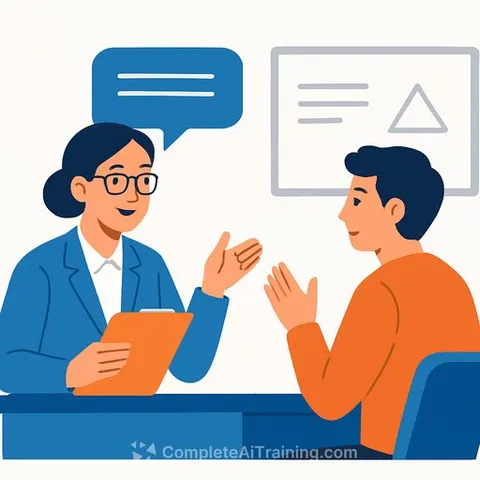
Professors Revive Oral Exams to Combat AI in Student Work
Facing pressure from AI writing tools like ChatGPT, a growing number of professors are turning to oral exams to directly assess what students actually know. The method bypasses the risk of AI-generated essays and forces students to think on their feet.
Catherine Hartmann, a professor at the University of Wyoming, implemented oral exams in her honors seminar in December 2026. The approach engages students in discussion about course material, making it difficult for them to rely on AI assistance.
Why educators are reconsidering an old method
Oral exams predate the printing press. For centuries, they were the standard way to evaluate student knowledge. As AI tools become more sophisticated and accessible, they've become relevant again.
Traditional written exams now carry a built-in problem: distinguishing between student work and AI-generated content. Oral exams sidestep this entirely. A professor can ask follow-up questions, probe reasoning, and observe how a student thinks through material in real time.
The method aligns with the Socratic tradition of dialogue-based learning, where understanding emerges through direct conversation rather than prepared text.
The practical challenges
Oral exams work well for small seminars. They become unwieldy at scale. A professor teaching 200 students faces a scheduling nightmare. Each exam takes time to conduct and evaluate, and consistency across dozens of conversations is harder to maintain than grading identical written tests.
For large lecture courses, oral exams may not be feasible. For smaller classes and seminars, they offer a practical solution to a real problem.
What comes next
Educators and administrators are still evaluating whether oral exams can work as a broader response to AI in higher education. The method's long-term viability depends on addressing logistics, especially for larger enrollments.
For educators looking to understand how AI is changing academic work, AI for Education and the AI Learning Path for Teachers offer practical frameworks for adapting to these shifts.