
AI news ·
Prosecutors need AI training and tools to keep pace with tech-savvy criminals, expert argues
Criminals already use AI to fabricate evidence, run fraud schemes, and generate deepfakes-yet many prosecutors avoid the technology after high-profile misuse cases. That gap leaves offices unprepared to detect or prosecute AI-driven crimes.
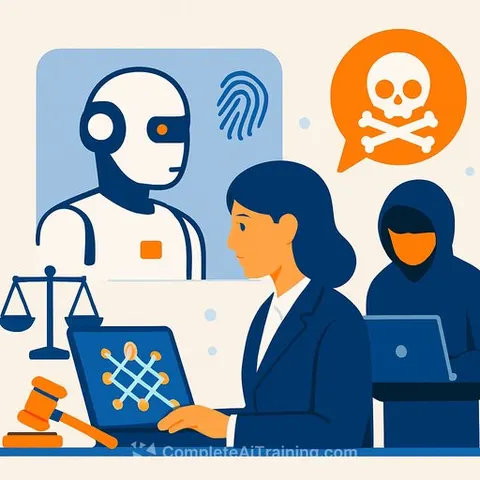
Prosecutors Need AI Training and Tools, Not Avoidance
Prosecutors across the country face a paradox: they must understand artificial intelligence to fight criminals who already use it, yet high-profile cases of AI misuse have created widespread wariness in district attorneys' offices.
A prosecutor resigned after using AI to draft a brief without adequate review, resulting in fabricated quotations and misrepresented case holdings. Georgia's Supreme Court suspended another prosecutor for six months after her misuse of AI tools produced fake and misleading case citations in a murder case ruling.
These failures have sparked a reasonable caution. But refusing to use AI altogether creates a different problem: prosecutors will lack the expertise to detect when criminals exploit the technology.
Criminal Use Is Already Widespread
The FBI warns that criminals use generative AI to commit fraud at scale with increased believability. The Commodity Futures Trading Commission reports the technology makes it easier to create fake images, voices, videos, and fraudulent websites.
AI automates phishing campaigns, enables cyberattacks, and produces child sexual abuse material. Prosecutors need to understand these threats to identify and prosecute them.
Fake Evidence Now Reaches Courtrooms
Deepfakes and AI-generated content create immediate problems for the justice system. In California, plaintiffs submitted deepfake videos as authentic testimony in a housing dispute. A Florida woman spent two days in jail after her ex-boyfriend allegedly used AI to fabricate text messages.
These cases damage more than individual defendants. When judges and juries cannot distinguish real evidence from fabricated material, evidence loses its evidentiary value. The National Center for State Courts calls AI-generated evidence "a threat to public trust in the courts."
Prosecutors need sophisticated tools to detect fakes quickly. In Texas, discovery rules give defendants broad access to evidence but prosecutors little reciprocal access, meaning a defendant could introduce AI-manufactured "evidence" at trial that prosecutors had no chance to authenticate beforehand.
The Tools Gap
A Stanford Law School report identifies the core problem: thousands of under-resourced police departments, prosecutors' offices, courts, and probation units lack the technical expertise to evaluate AI tools. Meanwhile, vendors market directly to practitioners without adequate guidance.
The Association of Prosecuting Attorneys offers some training, but it remains insufficient. Prosecutors need proven, trustworthy tools and instruction on their proper use. Small offices in rural areas and large urban offices will have different needs, but all should operate from the same knowledge base.
Refusing to engage with AI is short-sighted. The technology will shape criminal investigations and courtroom evidence regardless. Prosecutors who understand it will better serve justice.
Learn more about AI for Legal professionals and how to apply these tools responsibly in your practice.