
AI news ·
Legal gray areas emerge around AI-generated voices in music
Copyright law has no clear answer on who owns AI-generated vocals or whether replicating an artist's voice requires permission. Platforms like Spotify and YouTube are setting their own policies while awaiting court rulings or legislation.
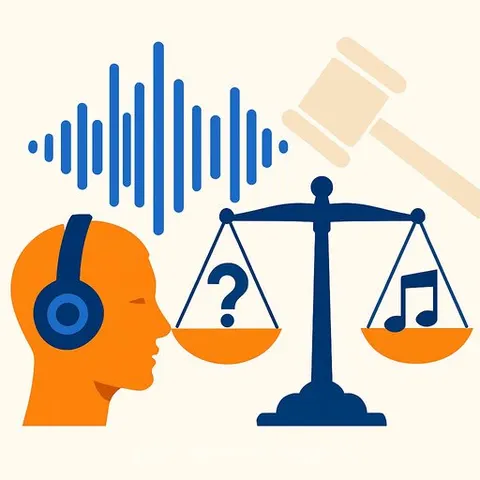
AI-Generated Voices in Music Create Legal Uncertainty for Entertainment Industry
Artificial intelligence is advancing into music production faster than copyright law can keep pace, leaving artists, platforms, and rights holders navigating a legal gray area with few clear answers.
The technology allows creators to generate realistic vocal performances without hiring singers or licensing existing voices. Record labels, streaming services, and music platforms face mounting pressure to address the legal implications before disputes become widespread.
The Core Legal Problem
Current copyright frameworks don't clearly address who owns rights to AI-generated vocals or whether using an artist's voice characteristics without permission constitutes infringement. Voice is not automatically protected like a composition or recording, creating gaps in existing law.
The situation mirrors earlier disruptions in entertainment-comparable to what the music industry faced with file-sharing platforms. Without legislative clarity or court precedent, companies operate without knowing their legal exposure.
What's at Stake
Rights holders worry about unauthorized voice replication. Artists face potential loss of income from vocal work. Platforms must decide whether to allow AI-generated content without risking liability.
The Federal Circuit and other courts have not yet issued major rulings on AI voice ownership, leaving companies to make decisions based on incomplete information.
Industry Response
Spotify, YouTube, TikTok, and other major platforms have begun implementing policies, but approaches vary widely. Some require disclosure of AI use. Others restrict certain applications. No industry standard exists.
Music rights organizations and major labels are pushing for legislation that would establish clear rules around voice ownership and licensing requirements for AI-generated content.
For legal professionals, understanding these issues requires knowledge of both AI for Legal applications and how generative AI and LLM technology functions in practice. The answers will shape how entertainment law evolves over the next several years.