
AI news ·
Radio broadcasters weigh AI efficiency gains against legal and editorial risks
Radio stations are adopting AI for sales proposals, content drafts, and operations-but nothing publishes without human review. Legal risks around voice cloning, copyright, and political ads are growing as states tighten rules.
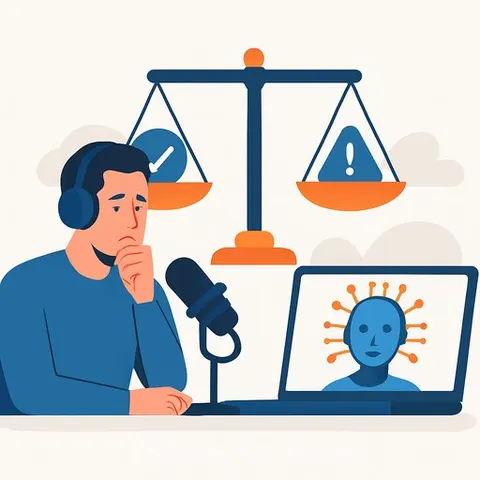
Radio Stations Deploy AI Across Sales, Programming, and Operations
Artificial intelligence is moving from pilot projects to standard practice across radio operations, with broadcasters automating everything from content creation to sales proposals. But success depends on maintaining human oversight and understanding the legal risks, according to industry leaders speaking at the NAB Show's Small and Medium Market Forum.
Townsquare Media, which operates hundreds of radio stations, is already using AI across content workflows, sales strategy, operations, and backend data processing. The shift is expanding who can contribute to product development-engineers, sales staff, and operations teams now build software tools without coding expertise.
Where AI Helps Sales Teams Move Faster
On the sales side, AI for Sales tools are shortening proposal cycles. AI can generate spec creative, draft campaign strategies, and build client proposals in hours instead of days.
"It shortens the cycle," said Sun Sachs, who oversees AI implementation at Townsquare. "You can get something in front of a client quickly, get feedback, and refine from there."
Sales teams can engage clients earlier and iterate faster. The technology handles the routine work-formatting, drafting, organizing data-so reps focus on strategy and relationship-building.
Automation Frees Staff for Higher-Value Work
AI Productivity & Workflow Automation is removing repetitive tasks across the station. AI assists with drafting articles, generating social media assets, and preparing digital posts.
Sachs compared the effect to giving each employee a virtual support team. "Imagine each person having synthetic team members handling the grunt work," he said. "That allows them to focus on what really matters."
For small and medium market stations with limited staff, this extends resources without hiring.
The Line Between Assistance and Replacement
Townsquare has set a clear rule: AI can assist with ideation and drafting, but nothing publishes without human approval. "Nothing goes out verbatim," Sachs said.
The distinction matters legally and editorially. Original local voice-the thing audiences value-comes from human judgment and local knowledge. AI should support that work, not replace it.
Legal Risks Are Real and Growing
Communications attorney David Oxenford warned that AI-generated content can quickly cross legal lines. Using synthetic versions of recognizable voices or likenesses-whether celebrities or private individuals-in commercial content can violate rights of publicity laws, which states are codifying at an accelerating pace.
"Most people have rights to their image and voice," Oxenford said. "Using those without permission, particularly in advertising, can create liability."
Copyright infringement is another risk. AI tools can unintentionally reproduce protected content, especially in news applications. Some AI-generated newscasts have closely mirrored competing outlets' reports, raising infringement exposure.
Voice cloning presents a specific challenge. Stations do not automatically own the rights to a personality's voice, meaning synthetic recreations could trigger legal challenges from talent.
Political Ads and Content Protection
Political advertising is becoming a flashpoint. A growing number of states are restricting AI in campaign ads, particularly when it involves deceptive or manipulated content. Broadcasters have limited control over candidate ads but could face defamation exposure if they knowingly air false material.
Townsquare also actively tracks unauthorized duplication of its content-entire websites copied and republished under different domains. The company maintains a dedicated team focused on content protection and enforcement.
Data Privacy Demands Enterprise Solutions
Public AI tools may retain or learn from user inputs, potentially exposing sensitive business information. Sachs recommended enterprise-level solutions with data safeguards rather than free consumer tools.
Oxenford advised broadcasters to understand how their chosen platforms handle data before uploading anything proprietary.
The Path Forward
AI adoption in radio is no longer optional. The technology works-it saves time, reduces costs, and extends limited staff capacity. But broadcasters need guardrails in place before adoption outpaces policy.
The rule is simple: maintain human oversight, understand your legal exposure, and when there's doubt about rights or ownership, pause before proceeding.