
AI news ·
Rapid AI adoption risks creating monocultures in scientific knowledge, researcher warns
AI's rapid spread in research risks narrowing scientific thinking, a JMIR analysis warns. Funding is shifting toward faster, AI-optimized output rather than harder problems that actually need solving.
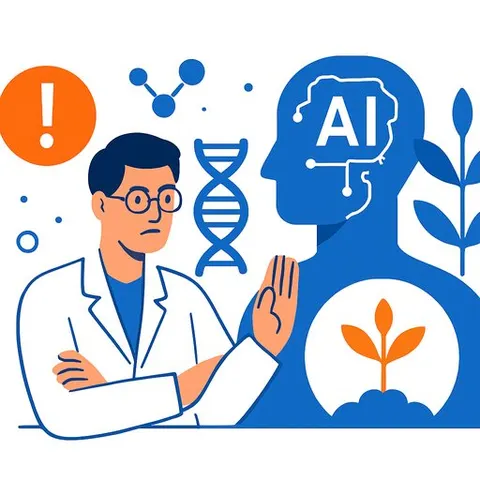
AI's Speed Is Outpacing Human Knowledge, Creating Risks for Science
JMIR Publications released an analysis warning that the rapid deployment of AI in research and academia risks creating uniform patterns of thinking that could undermine scientific discovery. The feature, published in May 2026, argues that while AI systems accumulate knowledge persistently across generations, humans must relearn foundational material from scratch-creating a fundamental mismatch in how knowledge evolves.
The concern centers on a practical problem: as AI becomes cheaper and faster, funding and attention flow toward projects that maximize output rather than tackle harder, riskier problems. Antimicrobial resistance offers a concrete example.
Where Investment Goes Matters
Researchers need new strategies to fight drug-resistant bacteria. Instead, AI hype has redirected funding toward high-throughput screening of existing drug compounds-faster results, but not the kind of innovation the field actually needs.
The volume problem compounds this. AI can generate research output at scales humans cannot match. That speed may mask a loss of depth and the kind of intuitive, strategic thinking required to solve public health crises.
Education Must Shift or Stall
Universities face a different pressure. AI now masters traditional curriculum content faster than any student can learn it. This has forced some educators to abandon written exams for oral assessments and handwritten work-a reversion to analog methods to verify that learning actually occurred.
The real educational challenge is different. As AI handles knowledge transfer, institutions need to focus on capacities where machines still fall short: identifying core problems, thinking outside established patterns, and developing interpersonal judgment.
The Monoculture Risk
AI systems learn from existing data. They excel at finding patterns in what already exists. They struggle with what doesn't yet exist-the novel ideas and unconventional approaches that drive scientific breakthroughs.
If research increasingly follows AI-generated suggestions, which are essentially statistical averages of existing knowledge, the diversity of thought necessary for innovation contracts. Science becomes more efficient at exploring known territory and less capable of discovering new territory.
What Needs to Change
The analysis calls for preserving human-centered pathways in knowledge generation. Higher education must ensure human intelligence remains distinct from AI systems and serves as oversight to them-not replacement.
For researchers, this means being deliberate about which problems get AI assistance and which require human judgment from the start. For institutions, it means resisting the efficiency argument when efficiency comes at the cost of the kind of thinking that matters most.
Learn more about AI Research Courses and AI for Education to understand how these tools fit into your work.