
AI news ·
Realbotix deploys humanoid robot Melody at Bitcoin 2026 to handle visitor guidance and basic questions
Realbotix deployed Melody, a $95,000 humanoid robot, at Bitcoin 2026 in Las Vegas to greet attendees and answer questions. The move signals AI shifting from screens into physical machines with real energy and e-waste costs.
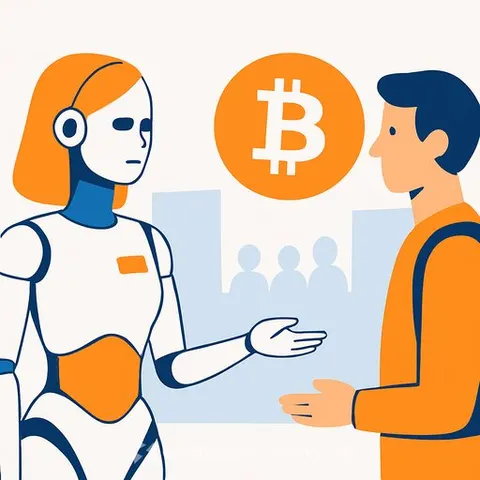
Humanoid Robot Arrives at Las Vegas Conference as Customer-Service Tool
Realbotix deployed Melody, a lifelike M-Series humanoid robot, at Bitcoin 2026 in Las Vegas to greet attendees, answer questions, and help visitors navigate the sprawling venue. The robot marks a visible shift: AI is moving from screens into physical bodies with real operational costs.
Melody is not a walking household assistant. She is a stationary upper-body robot designed for service roles in retail spaces, event venues, and reception areas. Realbotix says the M-Series has 39 degrees of freedom and starts at $95,000.
What Makes Embodied AI Different
Software running in the cloud has no physical footprint. A robot does. Melody requires motors, synthetic skin, sensors, wiring, electricity, maintenance, and eventual repair or recycling.
Realbotix CEO Andrew Kiguel said the company's core argument is straightforward: "AI is everywhere, but it lives behind a screen." A lifelike presence in crowded spaces, the pitch goes, feels less cold than a static kiosk.
The M-Series plugs into standard outlets for all-day operation, avoiding battery constraints. That convenience comes with a catch: the electricity cost shows up on the venue's power bill, not hidden in a data center.
Energy Use in a Larger Context
A single robot at one conference is not a major drain. But the numbers matter at scale. The International Energy Agency estimates that data centers used about 415 terawatt-hours of electricity in 2024-roughly 1.5% of global electricity use. That figure could reach 945 terawatt-hours by 2030.
Embodied AI adds another layer. Every robot that operates in the field is another machine drawing power, often in spaces already packed with lighting, cooling systems, and connected devices.
The E-Waste Problem
Humanoid robots are not smartphones, but they share the same fate: electronics with motors, rare materials, and components that become waste. The Global E-waste Monitor 2024 reported that the world generated 136 billion pounds of e-waste in 2022. Only 22.3% was formally collected and recycled properly.
That total could reach 176 billion pounds by 2030.
Realbotix's modular design-replaceable faces and body panels-could extend a robot's life if companies repair and upgrade units instead of replacing them. That only works if buyers get clear repair policies, spare-parts access, and documented recycling plans.
Business Calculation vs. Environmental Reality
At $95,000, Melody targets companies that want something more engaging than a touchscreen. The business case is straightforward: reduce repetitive front-desk work, create memorable interactions, guide visitors in noisy spaces.
The tension is real. The service industry wants smoother customer interactions. The tech industry wants AI to feel natural. The planet needs fewer short-lived machines and transparent energy accounting.
What to Ask Before Buying
Buyers should request specific information: daily electricity consumption, which cloud systems support the robot's conversations, how easily motors can be replaced, and where damaged components are sent for disposal.
These questions matter more than how natural Melody's gestures appear or how lifelike her smile looks.
Whether embodied AI becomes a durable service tool or another expensive contributor to e-waste depends on answers to those practical questions, not on the technology's appearance.
For customer-support professionals: AI for Customer Support and AI Agents & Automation cover how these technologies reshape frontline work and operational workflows.