Recruiters plan to lean on AI as "job hugging" intensifies
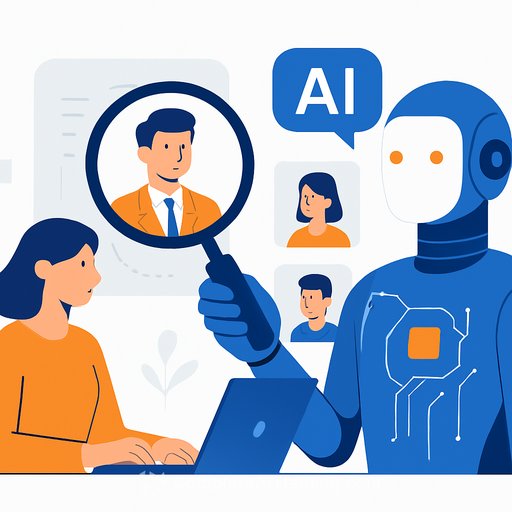
Hiring is still tough, but the tactic is changing. New data shows 93% of recruiters plan to increase their use of AI this year, and 66% expect to apply it earlier in the funnel for pre-screening interviews.
It's not hype. Fifty-nine percent of employers say AI has helped them surface skilled candidates they wouldn't have found before. And 70% believe AI will help them have more valuable conversations during pre-screens.
Why this matters now
The talent market is tight for a different reason: people are staying put. Workers enter 2026 more likely to remain with their employer than they were going into 2025, according to new data.
"Employees are anchoring onto the relative stability of their current roles as they see fewer viable or attractive external opportunities," said Melissa Jezior, president and CEO of Eagle Hill Consulting. She added that many are more satisfied with culture and pay as confidence in the job market softens.
Monster's latest insights echo it: workers are driven by realism and stability. Fifty-eight percent worry their salary won't keep up with inflation, pushing some to start or plan a side hustle. "They're still ambitious, but they're managing risk more carefully," said Vicki Salemi, Monster career expert.
Where AI earns its keep in pre-screening
- Profile matching: Score applicants to skills, outcomes, and must-have experience instead of vague titles.
- Question routing: Auto-generate role-specific pre-screen questions aligned to essential competencies.
- Signal extraction: Pull clear evidence of impact from resumes and portfolios (metrics, scope, tools).
- Conversation prep: Summarise candidate profiles so recruiters jump straight to high-value topics.
Many of these functions are powered by Generative AI and LLM, which extract signals and generate role-specific summaries.
Guardrails to avoid misfires
- Define "fit" as skills and outcomes, not proxies like school or previous employer.
- Use structured prompts and scoring rubrics so AI decisions are consistent and explainable; follow Prompt Engineering practices.
- Run bias checks: compare pass-through rates by demographic cohorts and adjust criteria if gaps appear.
- Be transparent: tell candidates where AI is used and how humans make final calls.
- Protect data: limit prompts to role-relevant info and apply access controls and retention limits.
Playbook: stand up AI in your recruiting stack in 30 days
- Week 1 - Role calibration: List the 5-7 skills and 3-5 measurable outcomes that define success for one priority role. Turn them into a clear rubric.
- Week 2 - Pre-screen build: Create 6-8 structured questions mapped to the rubric. Configure your AI tool to summarise answers and flag evidence by skill.
- Week 3 - Pilot and compare: Run AI-assisted pre-screens on 20-30 candidates. Compare pass/fail and quality-with-hire-speed against a human-only track.
- Week 4 - Audit and roll out: Review bias, accuracy, and candidate feedback. Lock the rubric, update prompts, train recruiters, and expand to 2-3 additional roles.
Candidate experience: keep the human center stage
- Set expectations: 1-2 lines in the invite explaining AI-assisted pre-screens and how responses are reviewed by humans.
- Offer choice: async pre-screen (AI summarises) or live call (recruiter-led). Different candidates prefer different modes.
- Give value back: Auto-generate a short recap of strengths and gaps after the pre-screen. It's fast and earns trust.
Rethink sourcing in a "job hugging" market
- Internal mobility first: Use AI for Human Resources tools to match employees to openings and training paths. Re-recruit your own people.
- Skills-based referrals: Ask for specific skill combos, not titles. Make it easy for employees to refer people with proof of work.
- Talent communities: Keep warm pipelines via short monthly updates, skill challenges, or portfolio spotlights instead of generic newsletters.
Metrics to track (and adjust fast)
- Time-to-first-conversation and time-to-shortlist
- Quality-of-slates: percent of candidates meeting 80%+ of the skills rubric
- Interview-to-offer ratio and offer acceptance rate
- Pass-through parity across demographics and sources
- Candidate satisfaction (quick 3-question pulse post pre-screen)
Practical prompts and rubrics you can copy
- Pre-screen summary prompt: "Summarise this candidate's evidence for [Skill A/B/C], cite exact lines or metrics, and rate confidence 1-5 per skill. Flag any gaps vs. the rubric."
- Scorecard structure: Skills (weight), Evidence (quote/metric), Score (1-5), Risk, Questions for next round.
- Hiring manager intake: "List the 3 mission-critical outcomes in the first 90 days and the constraints. Translate into measurable screening criteria."
Bottom line
If candidates are staying put, your edge is precision and speed. AI helps you find signal faster, but the win comes from clear rubrics, clean process, and honest communication.
Start where impact is highest: one role, one rubric, one pilot. Measure hard, tune weekly, then scale.
Helpful next steps
- AI courses by job: build recruiter skills and workflows
- Latest AI courses: stay current on tools and prompts
Your membership also unlocks: