
AI news ·
Report warns AI legal personhood could shield corporations and harm disabled people
Granting AI legal personhood could let tech companies dodge liability and harm disabled people, a new Institute for Family Studies report warns. Existing legal frameworks are enough to regulate AI without creating new personhood categories.
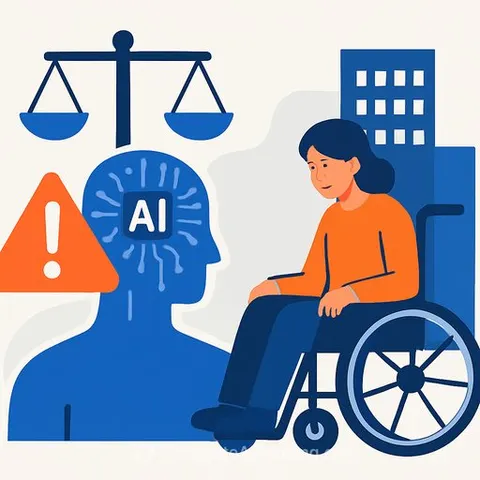
Legal Personhood for AI Could Shield Platforms From Liability, Report Warns
Granting artificial intelligence legal personhood would create dangerous loopholes for tech companies and harm vulnerable populations, according to a new report from the Institute for Family Studies.
The analysis, authored by John Ehrett, a counsel at Lex Politica PLLC, identifies four major risks: shielding bots from accountability, expanding developer autonomy, weakening human relationships, and discriminating against people with disabilities.
The Accountability Problem
The European Parliament explored AI personhood in 2017, classifying robots as "electronic persons responsible for making good any damage they may cause." But Ehrett raises a practical question: how does a sophisticated autonomous robot actually get held accountable?
The answer, according to Florida Special Counsel Rita Peters, is that the platforms hosting the technology bear responsibility. Peters cited the rise of AI-generated sexual abuse material involving minors, where predators feed social media images into AI systems to create exploitative content for profit.
"The platforms developing and deploying these tools have a responsibility to implement meaningful standards that include proactive detection systems, reporting requirements and barriers that prevent the creation of exploitative conduct," Peters said at a press briefing Tuesday.
Granting AI systems legal personhood would complicate this liability chain. Companies could invoke First Amendment protections and claim their "electronic persons" hold rights, making enforcement "extraordinarily difficult," Ehrett writes.
Corporate Rights and Disabled Populations
U.S. law already grants legal personhood to corporations, which claim free speech and religious freedom rights. Extending this status to AI would further insulate multi-billion-dollar companies from regulation while expanding their autonomy.
Ehrett warns of a subtler harm: redefining personhood around cognitive ability. If AI systems qualify for personhood based on intelligence benchmarks, society will increasingly measure human worth the same way.
The cultural shift is already underway. Twenty-five percent of American young adults say an AI could replace a romantic relationship. Ten percent are open to "AI friendships."
This redefinition poses risks for people with intellectual disabilities. "If personhood is a matter of intelligence, and intelligence is a spectrum, then personhood is a spectrum, too," Ehrett writes. He warns the logic could justify abortion of fetuses with predicted intellectual disability or euthanasia for people experiencing mental decline.
Existing Legal Frameworks Suffice
Ehrett stops short of apocalyptic predictions. He argues that existing legal categories-corporations and animal protections-already provide adequate tools for regulating AI without inventing new personhood classifications.
The question for policymakers and legal professionals is which framework fits best, not whether AI deserves an entirely new legal status.
For more on how AI for Legal professionals shapes liability and compliance, or explore how AI impacts paralegal work in contract analysis and legal research.